Understanding Korea’s Rental System: Jeonse, Monthly Rent & How to Find a Place
Key Takeaways
- Korea has a unique jeonse system — a massive deposit (often $75,000+) instead of monthly rent
- Most foreigners choose wolse (monthly rent) with a smaller deposit — expect ₩500,000–₩1,200,000/month in Seoul
- Budget options exist: goshiwon rooms start at ₩250,000/month with zero deposit
- You’ll need an Alien Registration Card (ARC) and a visit to a local real estate office (부동산)
- Always get confirmed date (확정일자) on your lease to protect your deposit
Moving to Korea — whether for work, study, or an extended stay — means navigating one of the most unique rental markets in the world. Korea’s housing system includes concepts that simply don’t exist elsewhere, and understanding them before you start apartment hunting will save you time, money, and stress.
This guide covers everything you need to know: from Korea’s famous jeonse deposit system to realistic monthly rent prices by neighborhood, plus exactly how to sign a lease as a foreigner.
Jeonse (전세): Korea’s Unique Deposit System
If you’ve done any research on Korean housing, you’ve probably encountered the word jeonse (전세) — and been confused by it. Here’s how it works:
How Jeonse Works
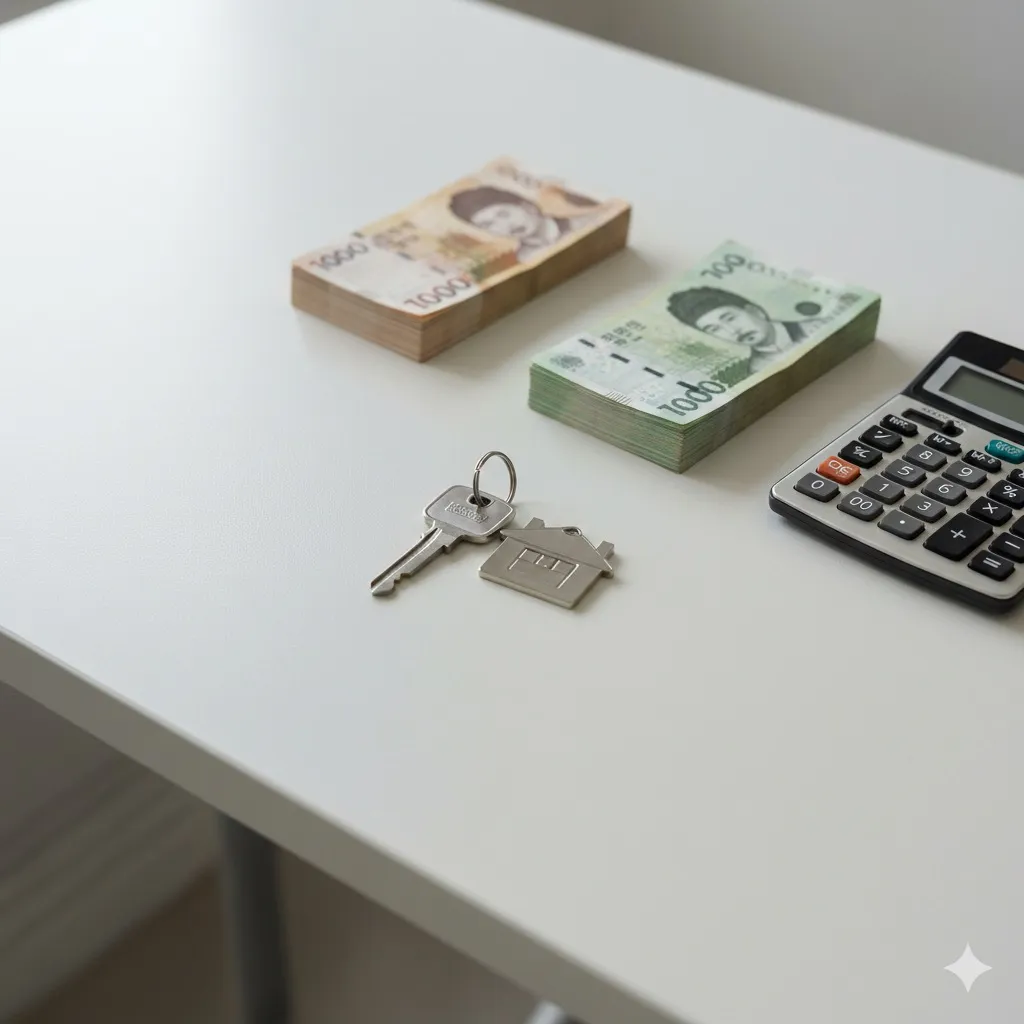
Instead of paying monthly rent, you give the landlord a massive lump-sum deposit — often tens of thousands of dollars. You live in the property rent-free for the contract period (usually 2 years), and when you move out, the landlord returns the full deposit.
The landlord profits by investing your deposit money or earning interest on it. You benefit by paying zero monthly rent.
Typical Jeonse Deposits
| Property Type | Seoul | Regional Cities |
|---|---|---|
| Studio/Officetel | ₩100M–200M ($75K–$150K) | ₩40M–100M ($30K–$75K) |
| 2-Room Apartment | ₩300M–700M ($225K–$525K) | ₩100M–300M ($75K–$225K) |
| Gangnam Area | ₩500M–1.5B+ ($375K+) | — |
Should Foreigners Consider Jeonse?
Honestly, probably not. Here’s why:
- The upfront cost is enormous — most foreigners don’t have $75,000+ sitting around
- Jeonse loans (jeonse daechu) are very difficult for foreigners to get
- Recent jeonse fraud scandals (전세 사기) have caused a national crisis — thousands of tenants lost their deposits when landlords (known as “빌라왕” or “villa kings”) defaulted. Even Koreans are increasingly wary of jeonse, especially for villas and older buildings
- The trend is shifting toward monthly rent anyway
Bottom line: Unless you’re staying 3+ years AND have significant capital, stick with monthly rent (wolse).
Monthly Rent (월세): What You’ll Actually Pay
For most foreigners, wolse (월세, monthly rent) is the realistic option. Korean monthly rent works like this:
- Pay a deposit (보증금, bojeungeum) — typically ₩5M–30M ($3,750–$22,500)
- Pay monthly rent on top of that
- Higher deposit = lower monthly rent (they’re inversely related — you can negotiate this)
The Deposit-Rent Tradeoff
This is unique to Korea. The same apartment might be listed as:
- Deposit ₩10M + Rent ₩700,000/month
- Deposit ₩30M + Rent ₩500,000/month
- Deposit ₩50M + Rent ₩300,000/month
More deposit money means lower monthly payments. If you have savings to put toward a deposit, it saves you money long-term.
Monthly Rent by Neighborhood
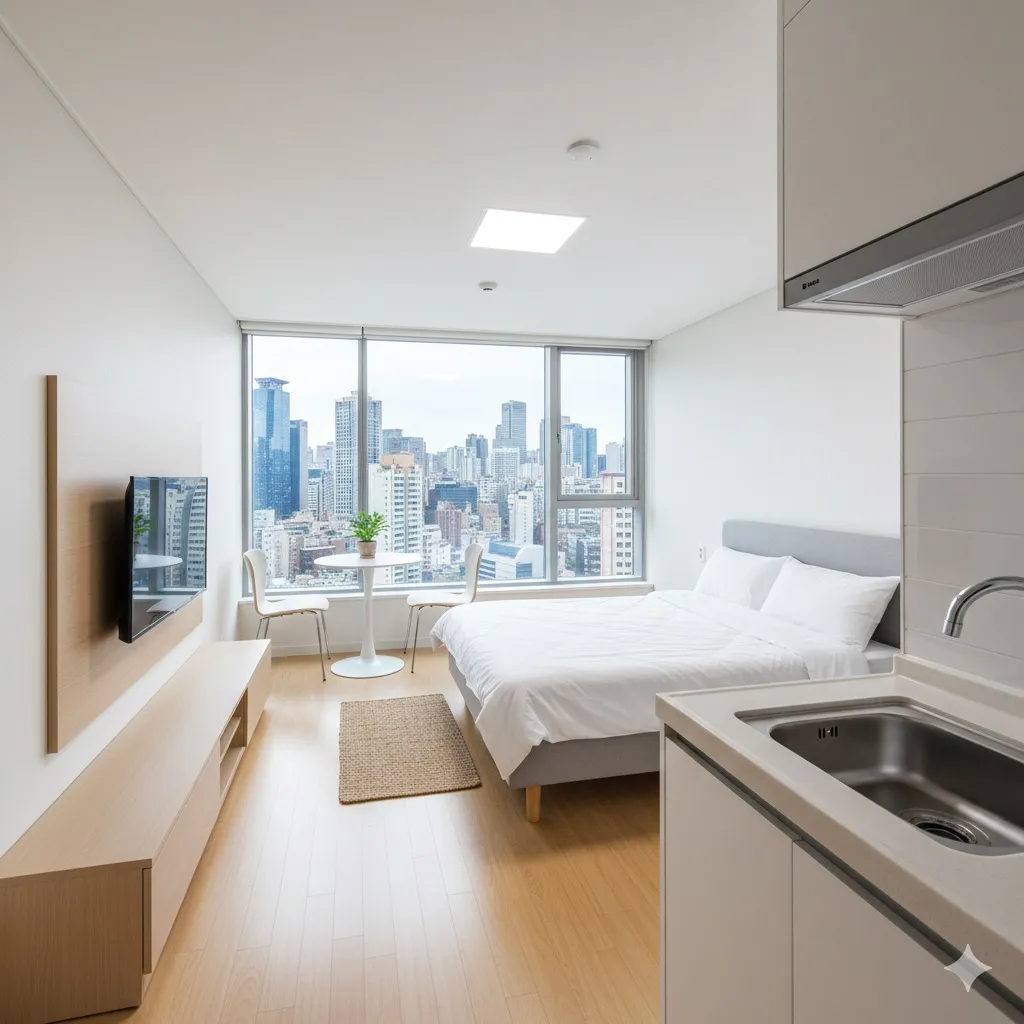
Here’s what you can expect to pay in Seoul’s most popular neighborhoods for foreigners. All prices are deposit + monthly rent, excluding maintenance fees.
Seoul
| Neighborhood | Studio (원룸) | Officetel | 2-Room |
|---|---|---|---|
| Gangnam / Seocho | ₩10M + ₩700K–1.2M/mo | ₩10–50M + ₩800K–1.5M/mo | ₩20–50M + ₩1M–1.8M/mo |
| Hongdae / Mapo | ₩5–20M + ₩500–900K/mo | ₩10–30M + ₩600K–1.1M/mo | ₩10–30M + ₩800K–1.3M/mo |
| Itaewon / Yongsan | ₩5–20M + ₩500K–1M/mo | ₩10–30M + ₩700K–1.2M/mo | ₩10–50M + ₩900K–1.5M/mo |
| Jongno / Gwanghwamun | ₩5–15M + ₩450–800K/mo | ₩10–20M + ₩550–900K/mo | ₩10–30M + ₩700K–1.2M/mo |
| Kondae / Seongsu | ₩5–20M + ₩500–850K/mo | ₩10–30M + ₩600K–1M/mo | ₩10–30M + ₩800K–1.3M/mo |
Maintenance fees (관리비) are extra: ₩50,000–250,000/month depending on building type (newer officetels tend to be higher). Winter heating can spike this significantly.
Outside Seoul
| City | Studio | Officetel |
|---|---|---|
| Busan (Seomyeon/Haeundae) | ₩3–10M + ₩300–550K/mo | ₩5–20M + ₩400–700K/mo |
| Daegu (Jung-gu/Suseong) | ₩2–7M + ₩250–450K/mo | ₩3–10M + ₩350–550K/mo |
| Jeju | ₩3–10M + ₩350–550K/mo | ₩5–15M + ₩400–650K/mo |
| Daejeon / Gwangju | ₩2–5M + ₩200–400K/mo | ₩3–10M + ₩300–500K/mo |
Regional cities are roughly 40–60% cheaper than Seoul.
Short-Term & Budget Options
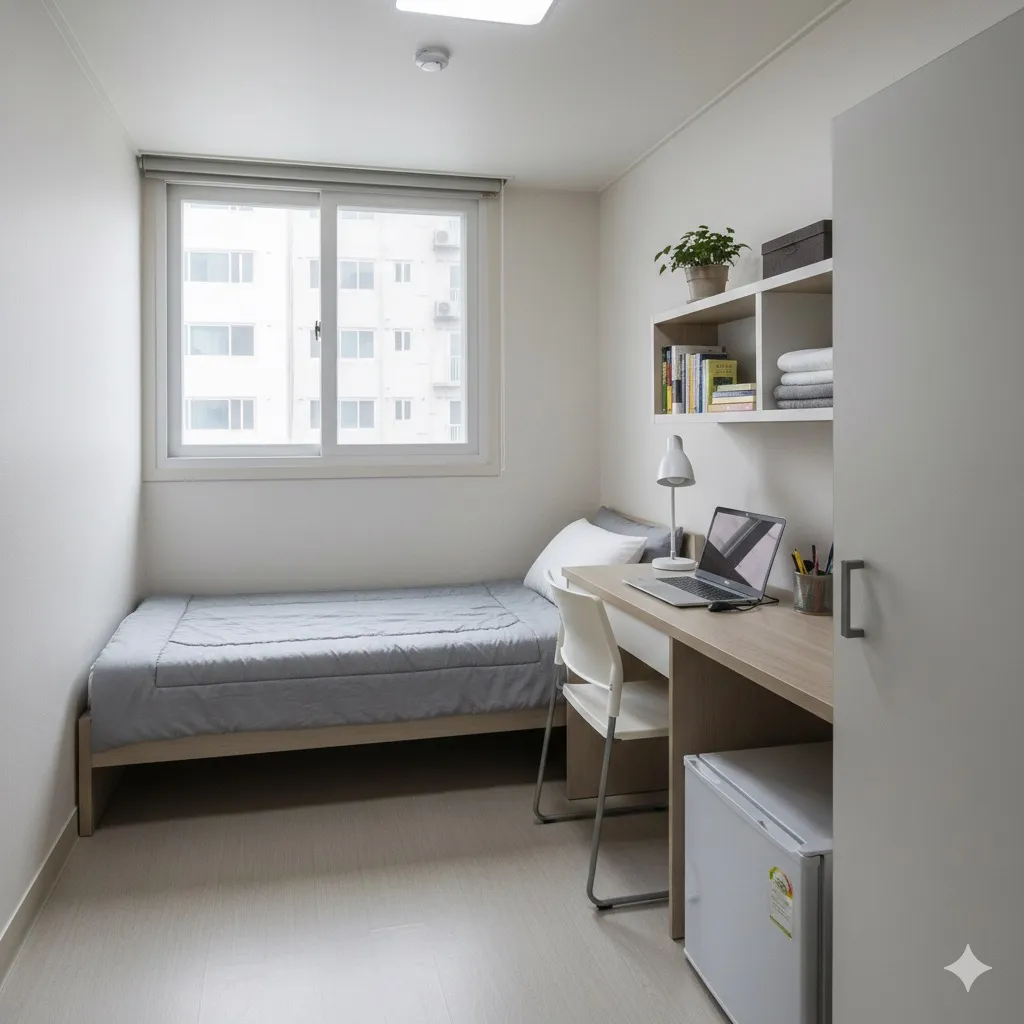
Not everyone needs (or can afford) a traditional lease. Here are alternatives:
Goshiwon / Goshitel (고시원)
The most affordable option in Korea. Originally designed for students preparing for exams, goshiwon are tiny single rooms (3–7㎡) in shared buildings.
- Cost: ₩250,000–500,000/month
- Deposit: None or ₩100,000–300,000
- Includes: Electricity, water, Wi-Fi; many provide free rice, kimchi, and ramen
- Minimum stay: 1 month
- Best for: New arrivals getting settled, tight budgets, short stays
The catch: Rooms are very small. Walls are thin. It’s not luxury — but it’s a roof over your head with zero commitment.
Share Houses
A popular middle ground, especially for foreigners. You get a private room with shared living spaces.
- Cost: ₩400,000–800,000/month
- Deposit: ₩500,000–1,000,000
- Minimum stay: 3–6 months
- Popular operators: Borderless House, WooZoo (우주), Come On Share House
- Best for: Foreigners wanting community, furnished living, and a smoother move-in process
Airbnb / Short-Term Rentals
- Cost: ₩50,000–150,000/night (₩1M–2M/month with long-term discounts)
- Deposit: None
- Best for: First few weeks while apartment hunting, or short visits
Serviced Residences
Hotel-like apartments with full kitchens and weekly cleaning.
- Cost: ₩1,500,000–4,000,000/month
- Operators: Oakwood, Fraser Place, Somerset
- Best for: Corporate relocations, families, those who want zero hassle
Quick Comparison
| Option | Monthly Cost | Deposit | Min. Stay |
|---|---|---|---|
| Goshiwon | ₩250K–500K | ₩0–300K | 1 month |
| Share House | ₩400K–800K | ₩500K–1M | 3–6 months |
| Studio (wolse) | ₩500K–1.2M | ₩5M–30M | 1–2 years |
| Airbnb (monthly) | ₩1M–2M | None | None |
| Serviced Residence | ₩1.5M–4M | 1 month | 1–3 months |
How to Sign a Lease
Step 1: Search Online First
Before visiting any offices, browse listings on these apps (Korean language, but translatable):
- Zigbang (직방) — Best for officetels and studios
- Dabang (다방) — Good for one-rooms and two-rooms
- Naver Real Estate (네이버 부동산) — Comprehensive, includes apartments
Step 2: Visit a Real Estate Office (부동산)
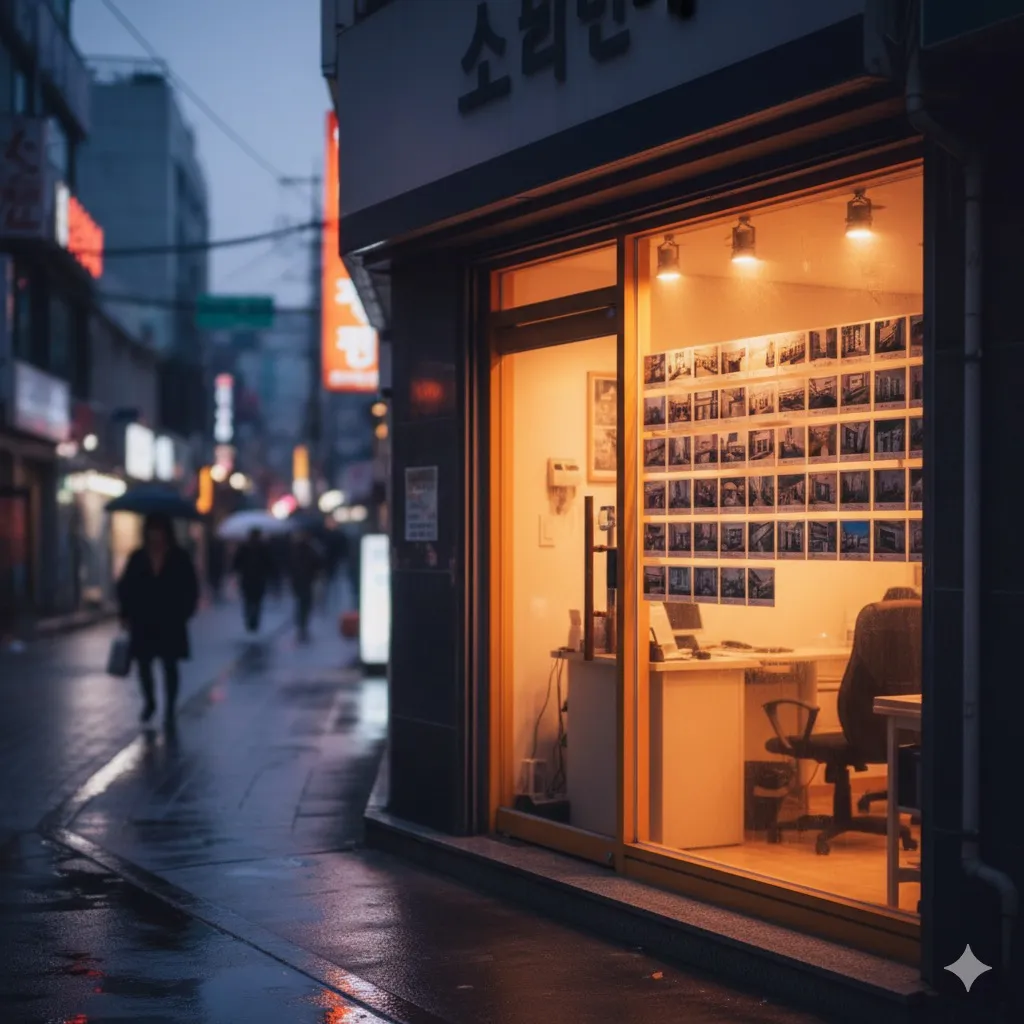
In Korea, you rent through licensed real estate agents called 공인중개사 (gong-in junggaesa). Their offices — marked with the orange 부동산 sign — are everywhere. Here’s what happens:
- Walk in and explain what you’re looking for (budget, area, size)
- The agent shows you available units in person
- If you like a place, you negotiate terms
- Sign the standard lease agreement (임대차계약서)
- Pay the deposit to the landlord’s bank account
Step 3: Documents You’ll Need
- Alien Registration Card (ARC) or passport
- Proof of employment (certificate of employment or contract)
- Bank balance certificate (to show you can cover the deposit)
- Contract deposit (계약금): Usually 5–10% of the total deposit, paid at signing
Agent Fees (중개 수수료)
Agent fees are regulated by law:
| Transaction Value | Max Fee Rate |
|---|---|
| Under ₩50M | 0.5% |
| ₩50M–100M | 0.4% |
| ₩100M–600M | 0.3% |
| ₩600M–1.2B | 0.4% |
For a typical studio with ₩10M deposit + ₩500,000 rent: the transaction value is calculated as deposit + (rent × 100) = ₩60M, so the fee would be around ₩240,000.
Can Foreigners Sign Leases?
Yes, absolutely. There are no legal restrictions on foreigners signing rental contracts in Korea. However:
- Some landlords prefer Korean tenants (communication concerns, deposit disputes)
- Having a Korean-speaking friend or colleague at the signing helps enormously
- Seoul Global Center (☎ 1688-0120) offers free housing consultation for foreigners, including help with contracts
Protecting Your Deposit
This is critical. Korean law provides strong tenant protections, but you must take specific steps to activate them:
1. Get a Confirmed Date (확정일자)
- Take your signed lease to the Community Service Center (주민센터) in your neighborhood
- They stamp your contract with an official date
- This gives you priority rights to your deposit if anything goes wrong
- Cost: ₩600 (yes, six hundred won)
2. Register Your Residence (전입신고)
- Must be done within 14 days of moving in
- Visit your local Community Service Center with your ARC and lease
- This is legally required — and also activates your deposit protection
- Foreigners must also notify Immigration (출입국관리사무소) of address changes within 14 days
3. Consider Deposit Insurance
For jeonse or large deposits, consider HUG (Housing & Urban Guarantee Corporation) or SGI (Seoul Guarantee Insurance) deposit protection insurance. This covers you if the landlord fails to return your deposit.
Extra Costs to Budget For
Don’t forget these on top of rent:
| Expense | Typical Cost |
|---|---|
| Maintenance fee (관리비) | ₩50K–250K/month |
| Gas/Heating (winter) | ₩100K–300K/month |
| Electricity | ₩30K–80K/month |
| Water | ₩10K–30K/month |
| Internet | ₩20K–30K/month |
| Agent fee (one-time) | ₩150K–500K |
Winter warning: Korea uses ondol (floor heating), which runs on gas. Winter heating bills can easily triple compared to summer. Budget ₩200,000–300,000/month for gas from November through March.
Tips for Foreign Renters
- Start with a goshiwon or Airbnb. Don’t sign a long-term lease before arriving. Spend your first 2–4 weeks exploring neighborhoods in person.
- Negotiate the deposit-rent ratio. If you have more cash upfront, offer a higher deposit for lower monthly rent. Landlords often prefer this.
- Take photos of everything before moving in. Document existing damage to avoid disputes when you leave.
- Understand automatic renewal (묵시적 갱신). If neither party gives notice 1–6 months before the contract ends, it automatically renews for 2 more years under the same terms.
- Use Seoul Global Center. Call 1688-0120 for free multilingual housing advice. They can even accompany you to real estate offices.
- Read your contract carefully. The standard lease is in Korean. Get it translated or bring someone who can explain every clause.
Looking for housing in Korea? Drop a comment with your situation and we’ll try to point you in the right direction!