12 Adventurous Korean Foods That Will Push Your Comfort Zone
Key Takeaways
- Korea’s most adventurous foods — from live octopus to fermented skate — aren’t tourist gimmicks, they’re dishes Koreans genuinely love and eat regularly
- Most “scary” Korean foods actually taste surprisingly good once you get past the appearance — especially sundae, gopchang, and yukhoe
- Traditional markets like Gwangjang Market and Noryangjin Fish Market are the best places to try these dishes at authentic prices (₩5,000~₩25,000 per dish)
- Almost every adventurous Korean food has a perfect soju or beer pairing — locals consider the drinking combo as important as the food itself
- You don’t need to speak Korean to order — just point, smile, and say “이거 주세요” (igeo juseyo / “This one, please”)
You’ve had Korean BBQ. You’ve devoured fried chicken with beer. You’ve slurped your way through a bowl of kimchi jjigae. But here’s the thing — you haven’t really experienced Korean food culture until you’ve sat in a crowded market stall watching a plate of octopus tentacles crawl toward the edge of your table.
Korea’s food scene goes deep. Way deeper than what makes it onto most tourists’ Instagram feeds. The dishes in this guide are the ones that make first-time visitors pause, stare, and ask, “Wait, people actually eat that?” The answer is yes — enthusiastically, often at 2 AM, and almost always with soju.
These aren’t foods Koreans eat to show off. They’re comfort foods, drinking snacks, and family dinner staples that happen to look wild to Western eyes. And once you get past the initial shock, most of them are genuinely delicious. This guide walks you through 12 adventurous dishes, from approachable to “you might want to hold your nose,” with honest taste descriptions, prices, and exactly where to find them.
Beginner Level: Looks Weird, Tastes Great
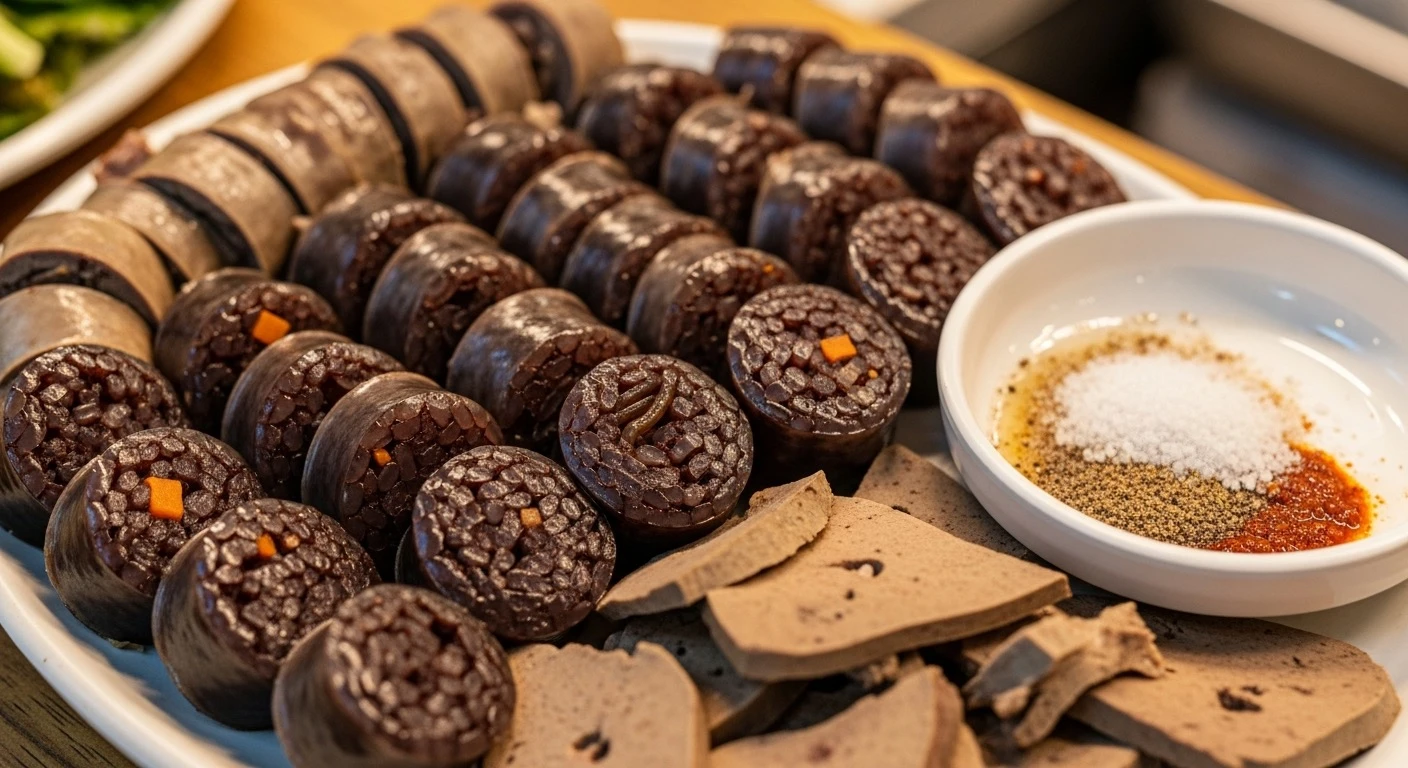
These dishes might look unfamiliar, but their flavors are approachable and satisfying. If you can eat a hot dog without thinking too hard about what’s inside, you can handle these.
Sundae (순대) — ₩3,000~₩5,000
Korean blood sausage — and it has absolutely nothing to do with ice cream. Sundae is pig intestine stuffed with glass noodles, barley, pork blood, and vegetables, then steamed. You’ll find it at every traditional market in Korea, usually sliced into thick rounds and served with a salt-and-pepper dip and sliced liver on the side.
The Taste: Mild and savory with a chewy, bouncy texture. The glass noodles inside give it a subtle sweetness. It tastes far less intense than it sounds — think of it as a Korean sausage with a unique, soft filling.
Best with: Tteokbokki (spicy rice cakes). The classic Korean street food combo is sundae-tteok — a plate of sundae alongside spicy tteokbokki. They complement each other perfectly.
Tip: Markets usually offer two types — regular sundae and “mixed” (모듬, modeum) which includes liver and lung. Try the modeum for the full experience.
Dakbal (닭발) — ₩12,000~₩18,000
Chicken feet, drenched in a blindingly red, fiery sauce. Dakbal is the ultimate late-night Korean drinking snack — you’ll find it at dedicated dakbal restaurants and pojangmacha (street tent bars) across Korea.
The Taste: Extremely spicy with a gelatinous, chewy texture. There’s not much meat — it’s all about the skin, cartilage, and that addictive sauce. If you don’t love gnawing on bones, order mupyeo dakbal (무뼈닭발) — the boneless version, which is just as popular.
Best with: Cold beer or soju. You’ll need something to cool down your mouth. Koreans also pair it with fried rice (볶음밥, bokkeumbap) made in the leftover sauce at the end.
Tip: Spice levels vary wildly between restaurants. If you’re not a spice champion, ask for “덜 맵게” (deol maepge) — “less spicy.”
Jokbal (족발) — ₩30,000~₩45,000 (serves 2-3)
Braised pig’s feet, slow-cooked in a fragrant broth of soy sauce, ginger, garlic, and cinnamon until the meat falls apart. Jokbal is one of Korea’s most beloved late-night delivery foods — entire neighborhoods have dedicated jokbal streets.
The Taste: Tender, rich, and deeply savory. The skin is soft and gelatinous (packed with collagen, Koreans will remind you), while the meat underneath is flavorful and succulent. It’s wrapped in lettuce with fermented shrimp paste (새우젓, saewujeot) and raw garlic — a perfect bite.
Best with: Soju, absolutely. Jokbal and soju is one of Korea’s most iconic food-and-drink combinations. Many jokbal restaurants serve it as a set.
Tip: Order “앞족” (apjok / front feet) for more meat, or “뒷족” (dwijok / hind feet) for more gelatinous skin. Most places offer small/medium/large sizes.
Golbaengi (골뱅이) — ₩15,000~₩20,000
Sea snails tossed in a spicy, tangy sauce with thin wheat noodles (somyeon), cucumbers, and onions. Golbaengi-muchim is a staple drinking food (anju) that you’ll find at Korean bars and hofs everywhere.
The Taste: The snails themselves are chewy and slightly briny, but the star is the sauce — sweet, spicy, tangy, and refreshing all at once. The cold noodles soak up the sauce and make it incredibly addictive.
Best with: Somaek (소맥) — soju mixed with beer. Golbaengi is peak Korean drinking culture. It’s the dish that appears on every table when Koreans go out for after-work drinks.
Tip: This is usually made with canned sea snails (which are perfectly good), but some restaurants serve fresh ones — those are pricier but worth it.
Intermediate Level: You’ll Need Some Courage
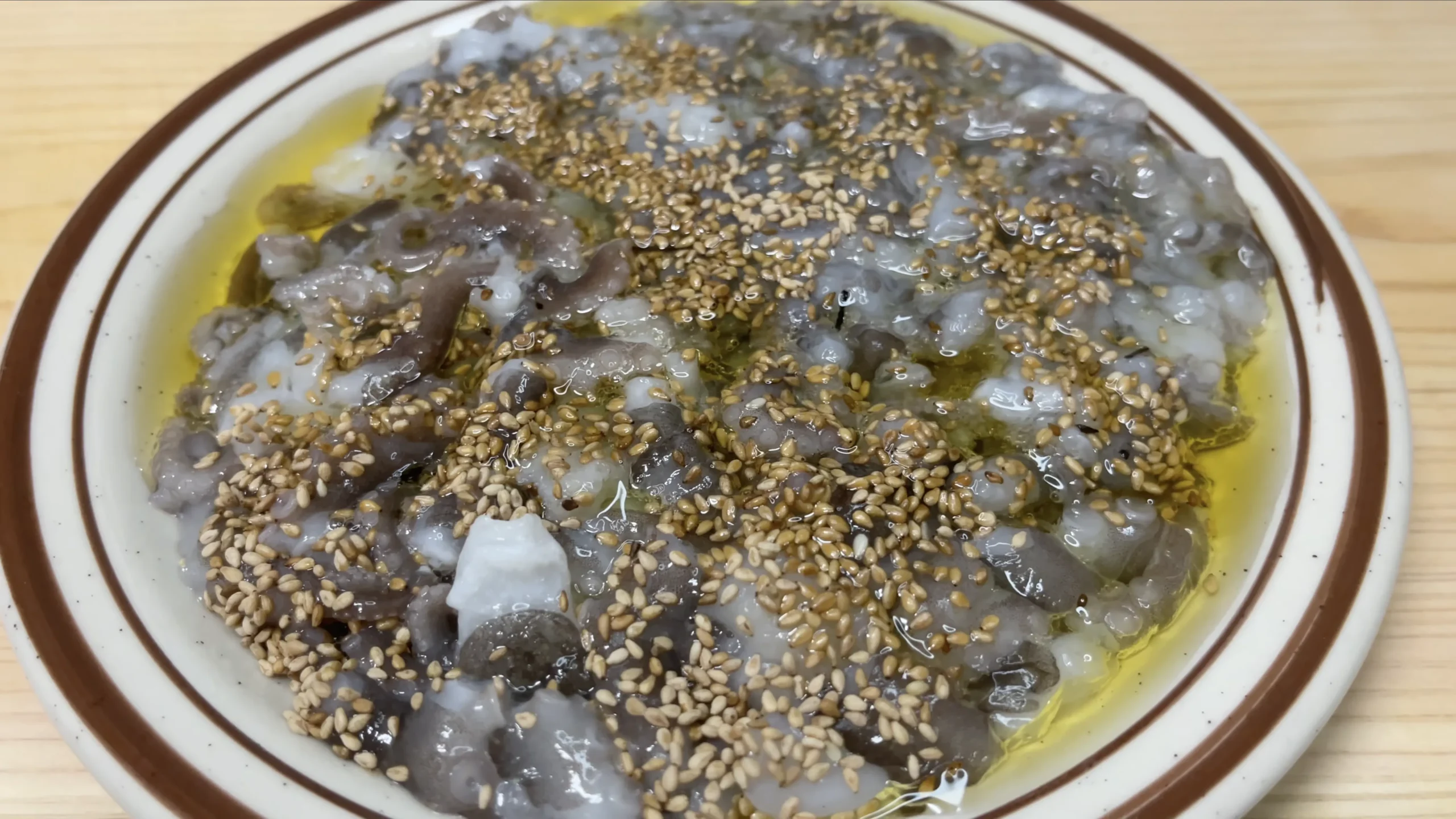
These dishes require you to push past a mental barrier — whether it’s something still moving on your plate, organs on the grill, or raw meat. But the payoff is worth it. Every single one of these is genuinely loved by Koreans.
Sannakji (산낙지) — ₩15,000~₩25,000
Yes, it’s still moving when it arrives at your table. Sannakji is freshly killed small octopus, chopped into bite-sized pieces and served immediately. The nerve endings are still firing, so the tentacles writhe, curl, and stick to the plate — and to your chopsticks. It’s the dish that every Korean food show makes tourists try first.
The Taste: Surprisingly mild. It tastes like very fresh, clean raw seafood, mostly carrying the flavor of the sesame oil and salt dip it’s served with. The real experience is the texture — intensely chewy, with suction cups that grip your teeth and tongue as you chew.
Best with: Soju. There’s even a famous Korean drinking tradition of dropping a live octopus tentacle directly into your soju glass.
Tip: Chew thoroughly before swallowing. The suction cups can stick to your throat — this is a genuine safety concern, not just a fun fact. Dip generously in sesame oil to reduce sticking.
Gopchang (곱창) — ₩15,000~₩25,000
Grilled beef or pork intestines. Gopchang has gone from humble working-class food to one of Korea’s trendiest dishes — there are entire “gopchang alleys” in neighborhoods like Euljiro and Sinchon where you’ll wait in line for a table.
The Taste: When properly grilled over charcoal, gopchang is smoky, rich, and almost buttery. The outer layer gets crispy while the inside stays soft and juicy. Daechang (대창, large intestine) is fattier and creamier, while gopchang (small intestine) is chewier and more flavorful. Most people find it addictive once they stop thinking about what it is.
Best with: Soju or beer. Gopchang restaurants always serve it with a soybean paste dip (된장, doenjang) and perilla leaves for wrapping.
Tip: If the idea of straight-up intestines is too much, order a “gopchang jeongol” (곱창전골) — a hot pot with intestines, vegetables, and noodles in a spicy broth. It’s a gentler introduction.
Yukhoe (육회) — ₩18,000~₩30,000
Korean-style raw beef tartare. Strips of fresh raw beef (usually tenderloin) seasoned with sesame oil, soy sauce, garlic, sugar, and topped with a raw egg yolk and julienned Korean pear. It’s been a Korean delicacy for centuries — long before steak tartare became trendy in Europe.
The Taste: Silky, melt-in-your-mouth tender, with a subtle sweetness from the pear and sesame. The egg yolk adds richness. It’s nothing like what you might expect from raw meat — it’s delicate, refined, and incredibly clean-tasting.
Best with: Soju or Korean rice wine (makgeolli). Yukhoe is often served as a starter at Korean BBQ restaurants or at dedicated raw beef specialty restaurants.
Tip: Gwangjang Market’s “Yukhoe Alley” is famous for this dish — multiple stalls compete for customers, and the quality is consistently excellent at around ₩15,000 per plate.
Beondegi (번데기) — ₩2,000~₩3,000
Steamed or boiled silkworm pupae. You’ll smell beondegi before you see it — vendors at traditional markets and parks serve it from large steaming vats, and the earthy, pungent aroma carries far. It was a major protein source during and after the Korean War, and it’s stuck around as a nostalgic snack.
The Taste: Nutty and earthy with a slightly juicy interior and a soft, popping shell. The flavor is mild, but the smell and the mental image of eating an insect are the real barriers. It’s packed with protein and Koreans often enjoy it as a casual snack with a toothpick.
Best with: Beer or soju. It’s classic drinking-snack territory.
Tip: Available canned at convenience stores if you want to try it in private before committing to eating it in public at a market. The canned version tastes the same.
Expert Level: The Final Frontier
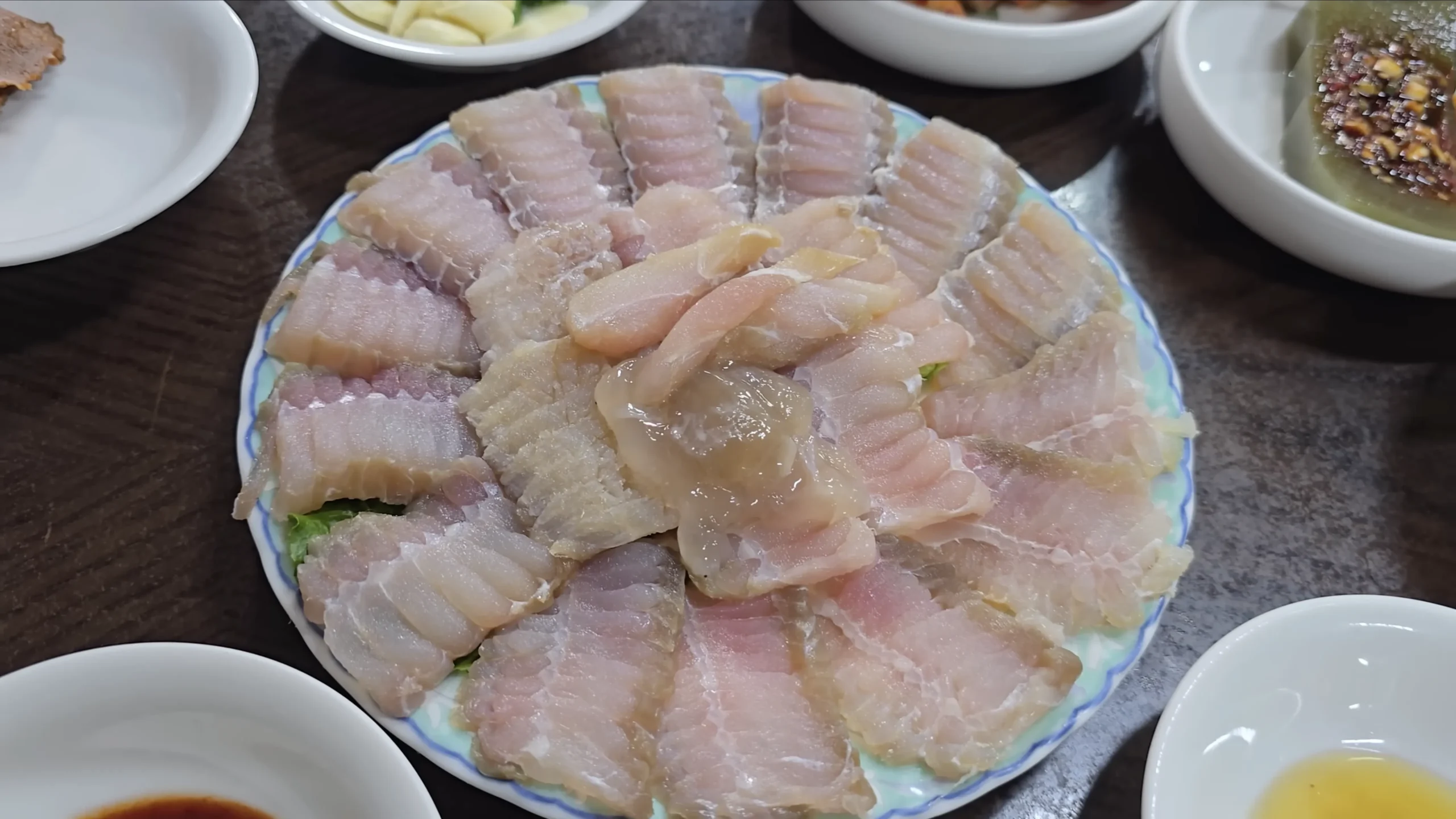
These dishes are the ones that even some Koreans hesitate at. Strong flavors, unusual textures, and in one case, actual ammonia. If you make it through this level, you’ve earned serious culinary respect.
Ganjang-gejang (간장게장) — ₩25,000~₩40,000
Raw crab marinated in soy sauce. Fresh raw crabs are soaked for days in a seasoned soy sauce brine until the flesh becomes soft, sweet, and intensely flavorful. Koreans call it “bap-doduk” (밥도둑) — literally “rice thief” — because you’ll unconsciously devour bowl after bowl of rice with it.
The Taste: Incredibly rich, sweet, and umami-packed. The raw crab meat has a silky, custard-like texture that melts on your tongue. The soy sauce marinade is deeply savory with a subtle sweetness. There’s also yangnyeom-gejang (양념게장), the spicy version, for those who prefer heat — but the soy sauce version is the classic.
Best with: Hot steamed rice. This is the one dish where the pairing isn’t alcohol — it’s rice. The restaurant will give you unlimited refills because they know you’ll need them.
Tip: Gejang restaurants in Seoul’s Sinsa-dong and Jongno areas are famous. Expect to pay ₩30,000+ per person, but it’s a meal you’ll never forget. Squeeze the crab roe onto your rice — that’s the best part.
Gaebul (개불) — ₩20,000~₩35,000
The infamous “spoon worm” (also known by its unfortunate nickname). Gaebul is a marine worm that lives in the mud of coastal areas, and its appearance is… exactly what the internet says it is. Despite the shock factor, it’s a genuinely prized delicacy at Korean seafood markets.
The Taste: Served raw, sliced into bite-sized pieces, and still twitching slightly. It has a surprisingly clean, sweet, sea-water flavor with an incredibly crisp, crunchy texture — similar to the firmest, freshest clam you’ve ever had. The taste is actually quite pleasant once you get past looking at it.
Best with: Soju and chogochujang (초고추장, a vinegar-chili paste dip). The dip cuts through the oceanic sweetness nicely.
Tip: Noryangjin Fish Market is the best place to try this in Seoul. Point at the gaebul in the tank, and the vendor will prepare it on the spot. Freshness is everything with this dish.
Meongge (멍게) — ₩15,000~₩25,000
Sea squirt (also called “sea pineapple” for its bumpy, orange exterior). Crack open the tough outer shell and inside you’ll find bright orange flesh with one of the most unique flavors in the entire seafood world. Meongge is a Coastal Korea specialty, especially popular in cities like Tongyeong and Busan.
The Taste: This is where descriptions fail. Meongge tastes like the ocean concentrated into a single bite — intensely briny, with a metallic, iodine-like quality and a bitter finish that hits the back of your throat. Some people love it immediately. Others need a few tries. There’s genuinely nothing else that tastes like it.
Best with: Soju. The strong, clean burn of soju pairs perfectly with meongge’s intense ocean flavor.
Tip: If straight-up raw meongge is too intense, try “meongge-bibimbap” (멍게비빔밥) — sea squirt mixed into rice with vegetables and gochujang. It’s milder and incredibly delicious. This is a must-try if you visit the southern coast.
Hongeo-hoe (홍어회) — ₩30,000~₩50,000
The final boss of Korean cuisine. Fermented skate fish. Skate naturally excretes uric acid through its skin, and when left to ferment, it produces ammonia. The result is a dish with a smell so powerful that dedicated hongeo restaurants have specialized ventilation systems. It originates from Korea’s Jeolla province and is a point of fierce regional pride.
The Taste: The ammonia hits your nose before the fish even reaches your mouth. Your eyes may water. The first bite produces a burning, tingling sensation in your nasal passages — similar to wasabi but more sustained. The flesh itself is chewy and firm. The traditional way to eat it is samhap (삼합) — a stack of fermented skate, boiled pork belly, and well-aged kimchi eaten together in one bite. The pork and kimchi tame the ammonia and create a surprisingly harmonious flavor.
Best with: Makgeolli (막걸리, Korean rice wine). The slightly sweet, creamy rice wine is the traditional pairing and genuinely helps balance the intensity.
Tip: Don’t start with hongeo alone — always eat it as samhap. And don’t breathe in through your nose while chewing. Seriously. First-timers should try a very small piece and build up gradually.
How to Order Like a Local
You don’t need to be fluent in Korean to eat adventurously. Here are the essential phrases:
- “이거 주세요” (igeo juseyo) — “This one, please” — the universal pointing-and-ordering phrase
- “추천 메뉴 뭐예요?” (chucheon menyu mwoyeyo?) — “What do you recommend?”
- “덜 맵게 해주세요” (deol maepge hae-juseyo) — “Make it less spicy, please”
- “한 인분이요” (han inbun-iyo) — “One serving, please”
- “소주 한 병이요” (soju han byeong-iyo) — “One bottle of soju, please”
- “맛있어요!” (mashisseoyo!) — “It’s delicious!” — guaranteed to make the chef smile
Pro tip: At markets, most stalls have photos or display the food directly. Just point at what looks interesting and say “이거 주세요.” The vendors are used to tourists and will guide you through the rest — often with enthusiastic hand gestures and big smiles.
Where to Find Them
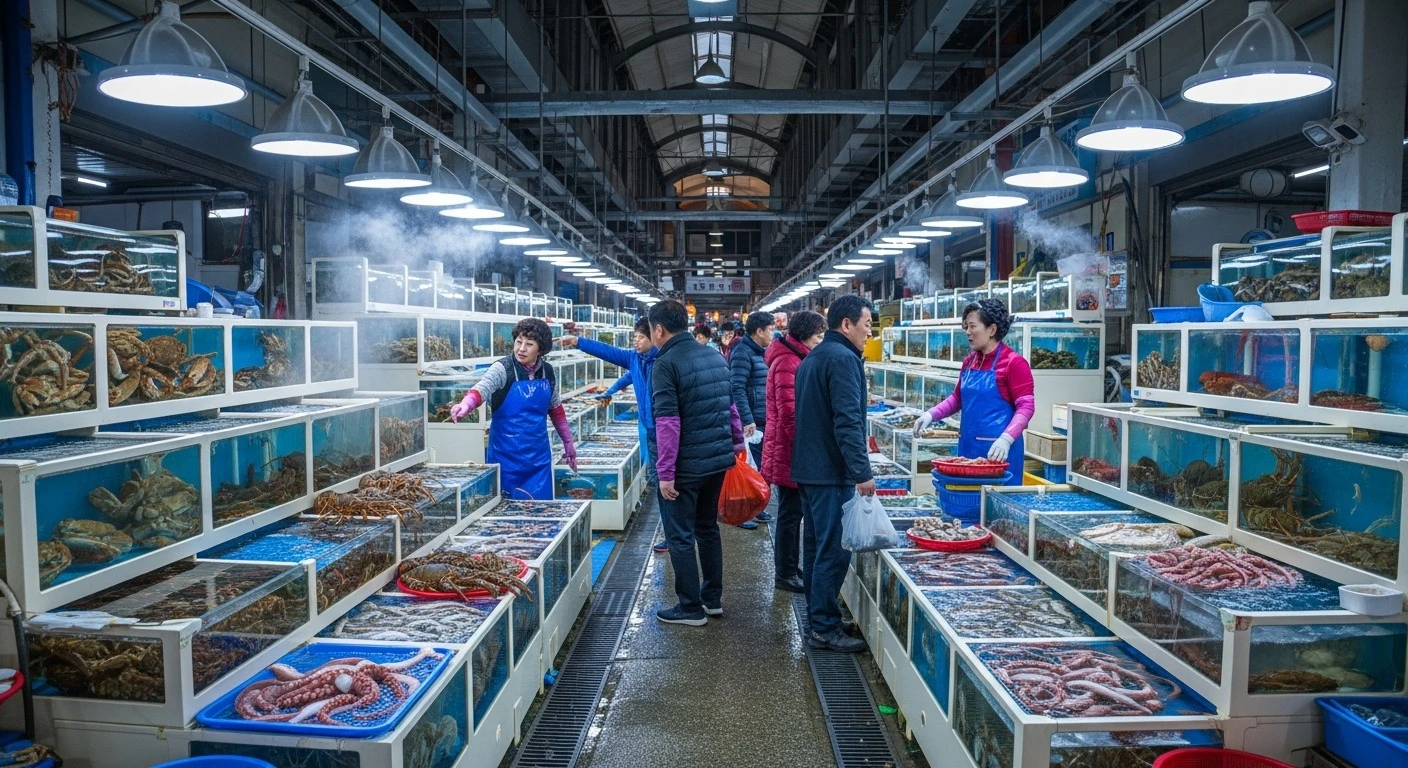
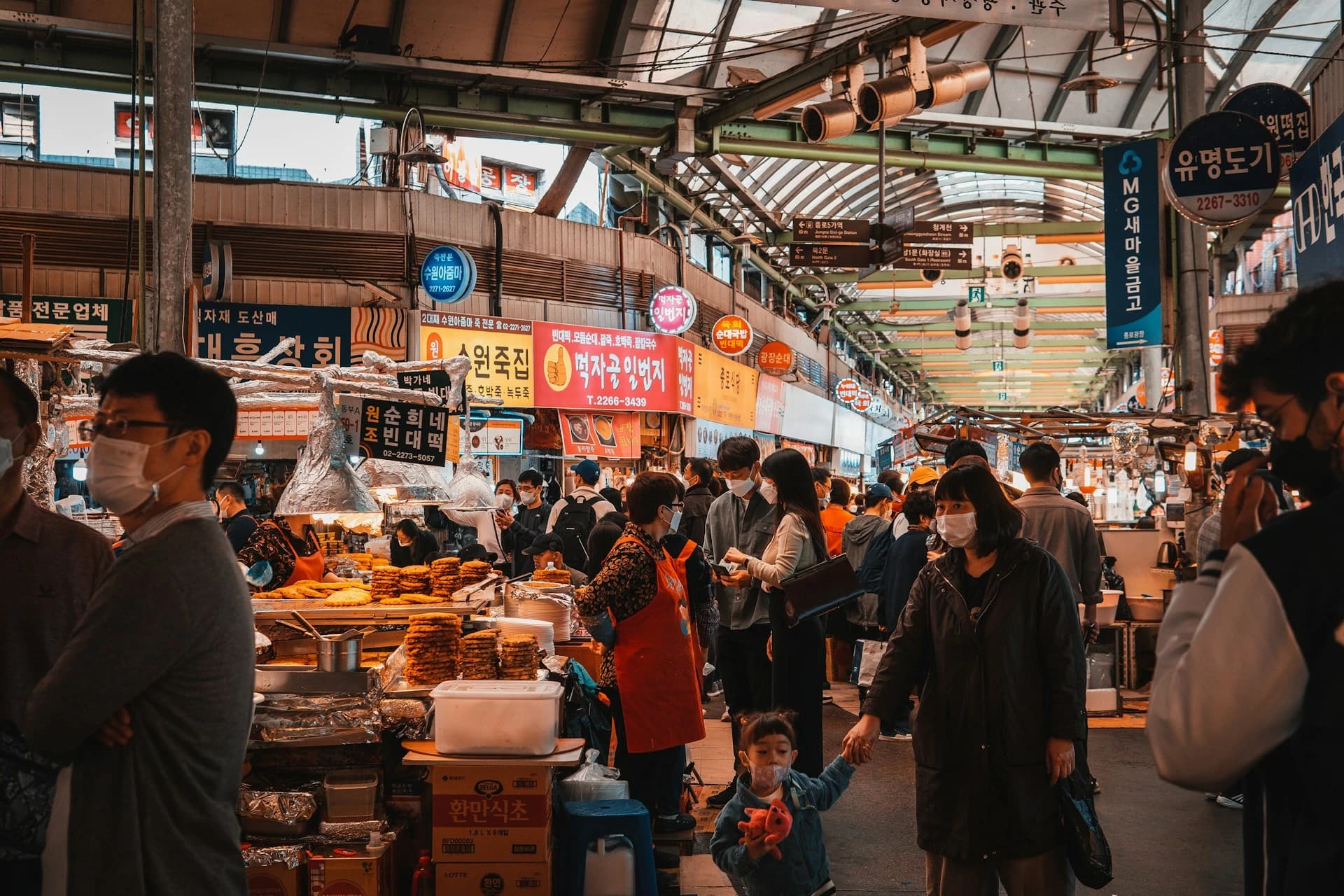
Gwangjang Market (광장시장), Seoul
Korea’s oldest and most famous traditional market, and the single best place in Seoul to start your adventurous food journey. The central food alley is packed with stalls serving everything from yukhoe to sundae to bindaetteok (mung bean pancakes).
Best for: Yukhoe (육회), sundae (순대), dakbal (닭발), beondegi (번데기)
Getting there: Subway Line 1 — Jongno 5-ga Station, Exit 8. The market entrance is a 1-minute walk.
Noryangjin Fish Market (노량진수산시장), Seoul
The largest fish market in Seoul. The ground floor is a massive wholesale market where you can pick live seafood from tanks — including sannakji, gaebul, and meongge. Take your purchase upstairs to one of the restaurants, and they’ll prepare it for a small fee (₩5,000~₩10,000).
Best for: Sannakji (산낙지), gaebul (개불), meongge (멍게), and any fresh raw seafood
Getting there: Subway Line 1 — Noryangjin Station, Exit 1. Cross the overpass directly into the market building.
Euljiro Gopchang Alley (을지로 곱창골목), Seoul
A narrow alley in Euljiro 3-ga packed with small, smoky gopchang restaurants that have been grilling intestines for decades. This is where office workers come for after-work grilled gopchang and soju — the atmosphere is gritty, authentic, and unforgettable.
Best for: Gopchang (곱창), daechang (대창)
Getting there: Subway Line 2 or 3 — Euljiro 3-ga Station, Exit 4. Walk into the alley behind the station.
Jokbal Alley at Jangchung-dong (장충동 족발골목), Seoul
Seoul’s most famous jokbal street. Several restaurants have been serving braised pig’s feet here since the 1960s, and the competition keeps quality high. Come at night when the neon signs light up and the alley fills with the aroma of slow-braised pork.
Best for: Jokbal (족발)
Getting there: Subway Line 3 — Dongguk University Station, Exit 3. The alley is a 5-minute walk.
Mokpo & Jongno (for Hongeo)
Fermented skate is a Jeolla province specialty, and the city of Mokpo is its spiritual home. In Seoul, head to the Jongno area where several restaurants specialize in hongeo and samhap. Look for signs reading “홍어삼합” — that’s your target.
Best for: Hongeo-hoe (홍어회), samhap (삼합)
Getting there (Jongno): Subway Line 1 — Jongno 3-ga Station, Exit 5. Ask locals for “hongeo jip” (홍어집).
Price Quick Reference
| Dish | Korean | Price Range | Difficulty |
|---|---|---|---|
| Sundae (blood sausage) | 순대 | ₩3,000~₩5,000 | Beginner |
| Dakbal (chicken feet) | 닭발 | ₩12,000~₩18,000 | Beginner |
| Jokbal (pig’s feet) | 족발 | ₩30,000~₩45,000 | Beginner |
| Golbaengi (sea snails) | 골뱅이 | ₩15,000~₩20,000 | Beginner |
| Sannakji (live octopus) | 산낙지 | ₩15,000~₩25,000 | Intermediate |
| Gopchang (intestines) | 곱창 | ₩15,000~₩25,000 | Intermediate |
| Yukhoe (raw beef tartare) | 육회 | ₩18,000~₩30,000 | Intermediate |
| Beondegi (silkworm pupae) | 번데기 | ₩2,000~₩3,000 | Intermediate |
| Ganjang-gejang (raw crab) | 간장게장 | ₩25,000~₩40,000 | Expert |
| Gaebul (spoon worm) | 개불 | ₩20,000~₩35,000 | Expert |
| Meongge (sea squirt) | 멍게 | ₩15,000~₩25,000 | Expert |
| Hongeo-hoe (fermented skate) | 홍어회 | ₩30,000~₩50,000 | Expert |
Tried any of these dishes? We want to hear your reaction — especially if you survived hongeo. Drop a comment below and tell us which one pushed your limits the most!