The Ultimate Guide to Korea’s Cafe Culture: More Than Just Coffee
Key Takeaways
- Korea has over 100,000 cafes nationwide — one of the highest cafe densities on Earth
- Budget chains like Mega Coffee and Paik’s Coffee offer Americanos for as low as ₩1,500 (~$1.10)
- Study cafes are a uniquely Korean concept — pay-per-hour quiet spaces with free drinks, open to foreigners
- Korean cafes are famous for fusion desserts like croffles, yakgwa lattes, and injeolmi toast
- Most cafes accept card-only payment and use kiosk ordering — cash is rarely needed
Korea has more cafes per capita than almost any country on Earth. In Seoul alone, there are over 18,000 coffee shops — more than New York, London, or Paris. Walk down any major street in Korea and you’ll pass a cafe every 30 meters. Sometimes three of them side by side.
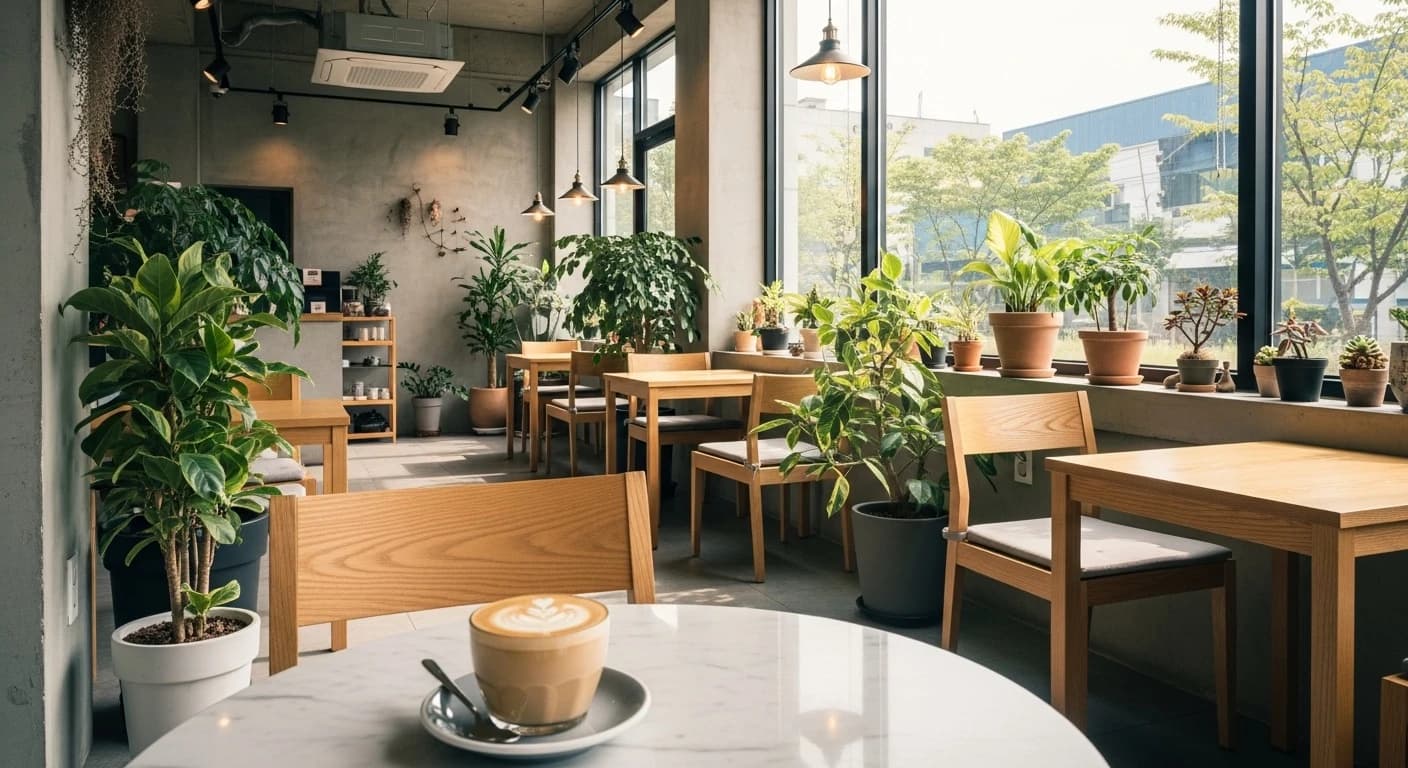
But Korean cafes aren’t just about coffee. They’re social infrastructure. They’re where students study for exams, where couples go on dates, where freelancers work, where friends catch up, and where solo visitors spend entire afternoons reading or people-watching. In Korea, a cafe is less “a place to grab a drink” and more “a second living room.”
This guide covers everything you need to know — from the cheapest Americano in town to the most photogenic dessert cafes, from study cafe etiquette to seasonal menu trends that change with the weather.
Cafe Types: Finding Your Perfect Spot
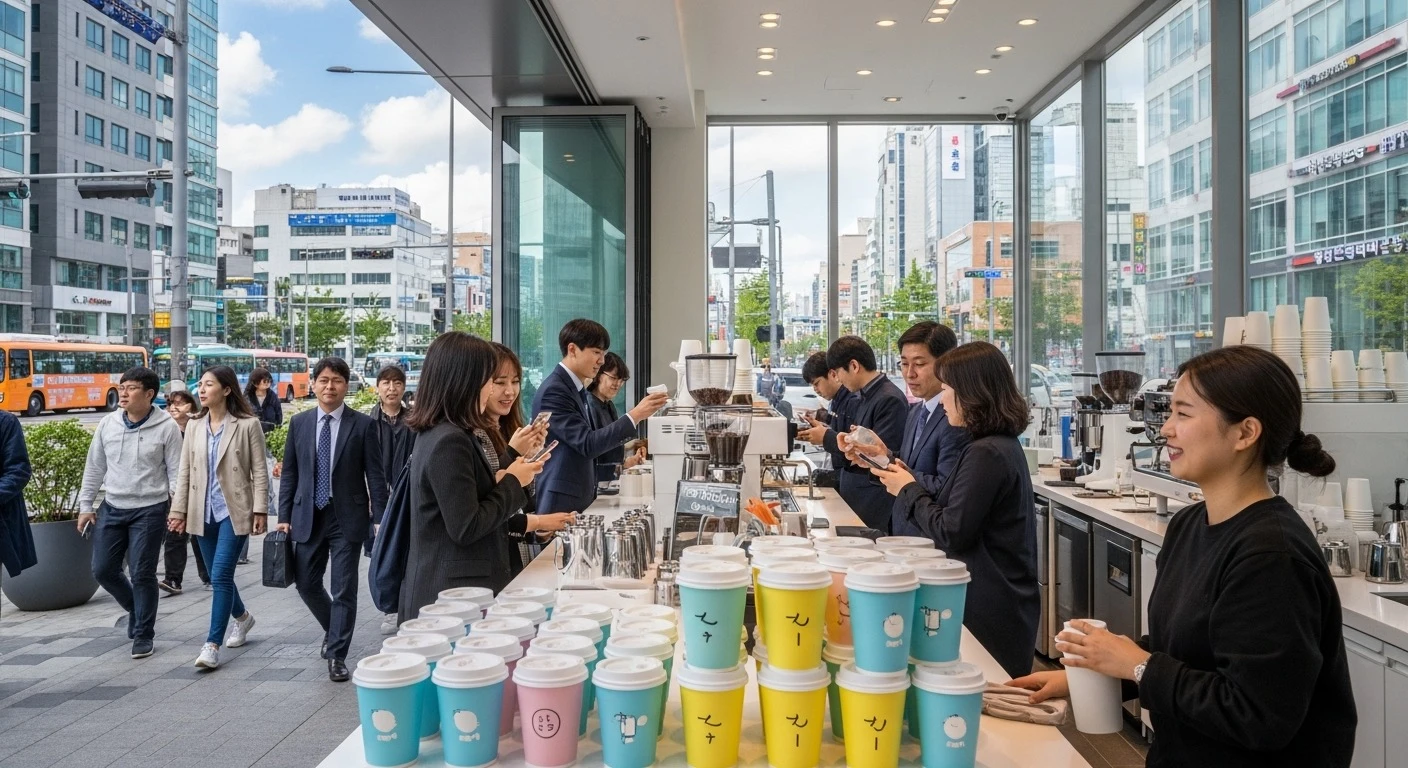
Franchise Chains
Korea’s franchise cafe scene is massive and highly competitive. Here’s what you need to know about the major players:
| Chain | Americano Price | Vibe | Best For |
|---|---|---|---|
| Starbucks | ₩4,500–₩5,500 | Premium, consistent | Reliable quality, WiFi, outlets |
| A Twosome Place | ₩4,500–₩5,000 | Upscale, dessert-focused | Cake and coffee combos |
| Ediya Coffee | ₩3,000–₩3,500 | Budget-friendly, quiet | Affordable daily coffee |
| Paik’s Coffee (빽다방) | ₩1,500–₩2,000 | No-frills, huge portions | Best value for money |
| Mega Coffee (메가커피) | ₩1,500–₩2,000 | Budget, massive cups | Cheapest large coffee |
| Compose Coffee | ₩1,500–₩2,000 | Ultra-budget takeout | Quick grab-and-go |
| Blue Bottle | ₩5,000–₩6,500 | Specialty, minimalist | Third-wave coffee experience |
Budget tip: Paik’s Coffee and Mega Coffee are the backpacker’s best friends. A large iced Americano (about 600ml) costs just ₩1,500 — roughly $1.10. The quality is surprisingly decent for the price. You’ll find these chains on virtually every block.
Premium pick: If you care about specialty coffee, Blue Bottle (yes, the San Francisco chain) has expanded across Seoul and offers single-origin pour-overs. A Twosome Place is the go-to if you want excellent cake with your coffee.
Independent & Specialty Cafes
Independent cafes are the soul of Korean cafe culture. Each neighborhood has its own cafe personality:
- Seongsu-dong: Converted warehouses and factories turned into industrial-chic cafes. Think exposed concrete, steel beams, and art installations.
- Yeonnam-dong: Cozy, Instagram-friendly spots with pastel interiors, plant walls, and creative latte art.
- Ikseon-dong: Traditional hanok (Korean house) cafes where you sip coffee in a 100-year-old wooden building.
- Mangwon-dong: A more local, laid-back vibe with roasters and bakery-cafes.
- Jeju Island: Unique ocean-view cafes with floor-to-ceiling windows overlooking volcanic coastlines.
Independent cafes typically charge ₩4,500–₩7,000 for drinks, and the quality of both the coffee and the space is usually exceptional.
Theme Cafes
Korea takes the theme cafe concept to another level:
- Cat cafes (고양이카페): Sip your latte while petting resident cats. Entry fee ₩8,000–₩12,000 (usually includes one drink). Popular chains: Cat Garden, Myeongdong Cat Cafe.
- Dog cafes (강아지카페): Same concept but with dogs. Some even have specific breeds like Corgis or Shiba Inus.
- Comic cafes (만화카페): Walls of Korean and Japanese comics (manhwa/manga). Pay by the hour, read all you want. Drinks included.
- VR cafes: Virtual reality gaming stations with a cafe vibe. ₩3,000–₩5,000 per 30 minutes.
- Board game cafes: Hundreds of board games to play. Pay per hour, order drinks and snacks.
- Flower cafes: Dried flower arrangements, floral interiors, and flower-themed drinks. Pure Instagram fuel.
Study Cafes: Korea’s Unique Co-Working Spaces
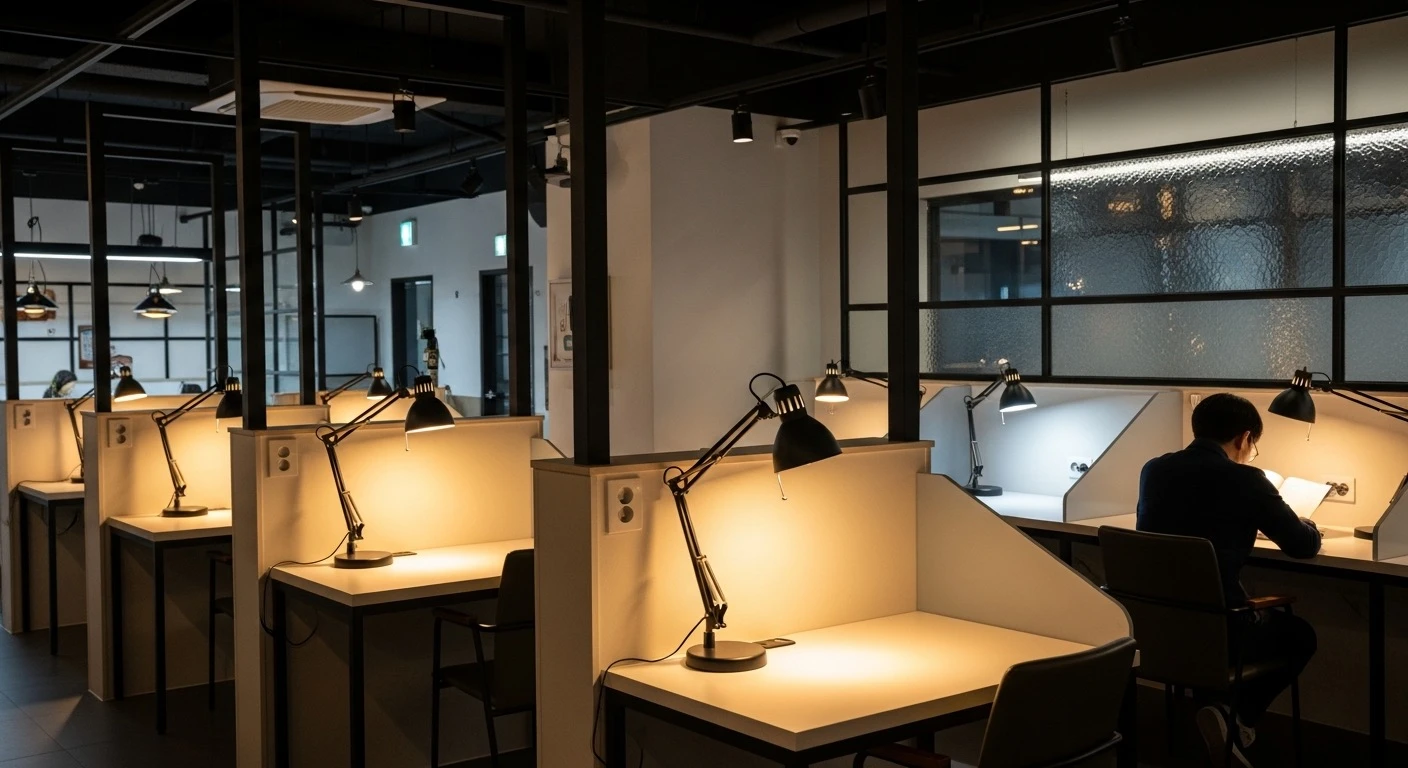
One of the most uniquely Korean inventions is the study cafe (스터디카페). These are paid, quiet spaces designed for studying and focused work. They’re wildly popular with Korean students preparing for university entrance exams and professional certification tests.
How They Work
- Walk in and approach the kiosk or counter
- Choose your time: Usually 1-hour, 2-hour, 3-hour, or all-day passes
- Pay by card (typically ₩1,500–₩3,000 per hour)
- Find an open seat — most have individual desk cubicles with partitions, a power outlet, and a reading lamp
- Free drinks: Self-serve coffee, tea, and sometimes snacks are included in the price
Pricing
| Duration | Typical Price |
|---|---|
| 1 hour | ₩1,500–₩2,000 |
| 2 hours | ₩2,500–₩3,500 |
| 3 hours | ₩3,500–₩5,000 |
| All day (12 hours) | ₩8,000–₩12,000 |
| Monthly pass | ₩100,000–₩180,000 |
Can Foreigners Use Study Cafes?
Absolutely. Study cafes don’t require membership or ID. The kiosk interface usually has an English option, and payment is card-only — just tap and sit. They’re open late (many until midnight or even 24 hours), making them a great option for travelers who need a quiet space to work, plan their trip, or escape the heat/cold.
Pro tip: Look for the “coin study cafe” (코인스터디) concept — these are unmanned, automated study rooms where you pay by inserting coins or tapping your card at the door. No staff, no interaction needed.
Korean Dessert Trends You Need to Try
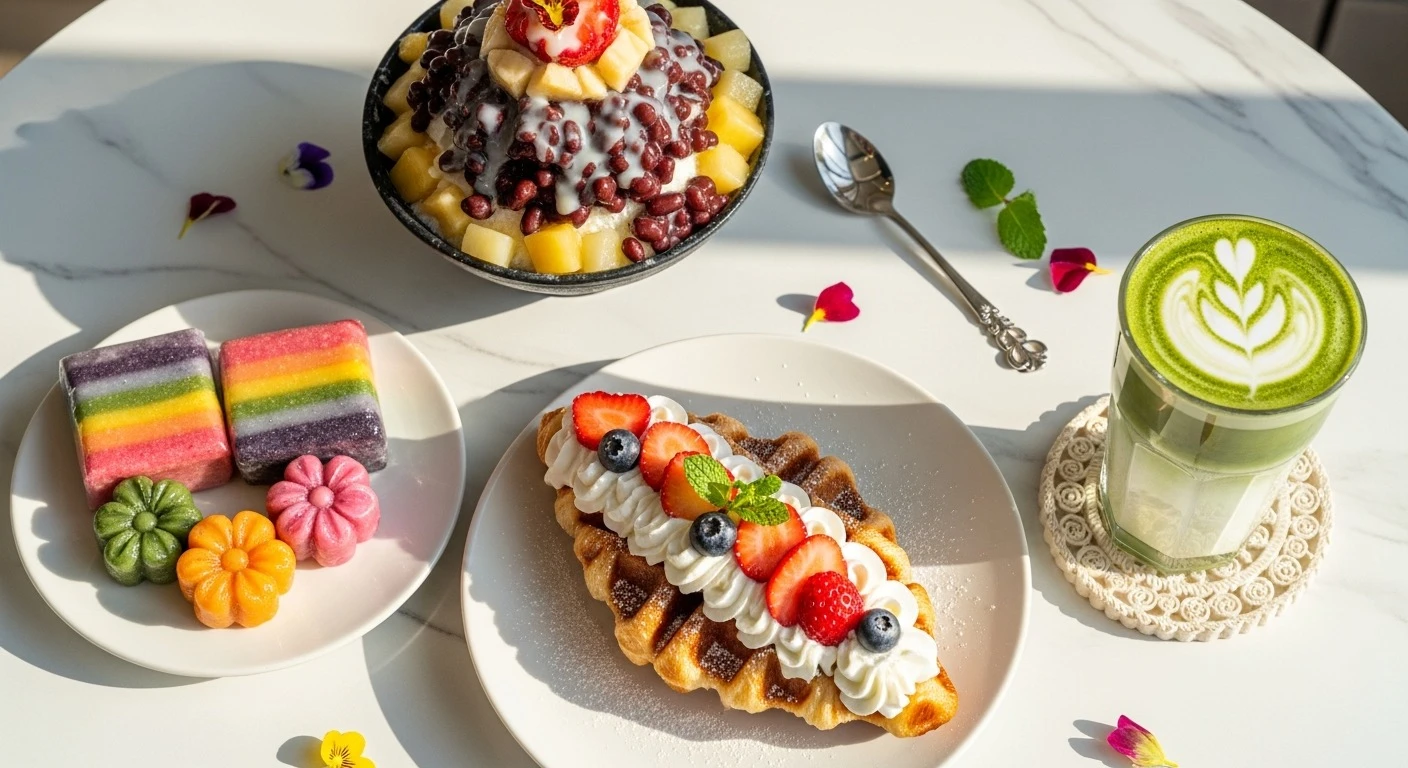
Korean cafes are as much about desserts as they are about coffee. The dessert scene is driven by trends that sweep the nation every few months. Here’s what’s been popular and what to look out for:
Current & Recent Trends
Croffles (크로플) — A croissant-waffle hybrid that became a national obsession. Pressed in a waffle iron until golden and crispy, served with ice cream, fruit, or chocolate. Available at nearly every cafe. ₩4,000–₩7,000.
Yakgwa (약과) — A traditional Korean honey cookie that’s made a massive comeback. You’ll find yakgwa lattes, yakgwa cream cakes, and yakgwa-flavored everything. The retro-traditional fusion trend is huge. ₩3,500–₩6,000.
Heugimja (흑임자, Black Sesame) — Black sesame lattes, black sesame cream cakes, and black sesame soft serve. Nutty, earthy, and distinctly Korean. ₩4,500–₩6,500.
Injeolmi (인절미) — A rice cake dusted in roasted soybean powder. Cafes serve injeolmi toast, injeolmi lattes, and injeolmi bingsu. The warm, toasty flavor is addictive. ₩4,000–₩7,000.
Bungeo-ppang (붕어빵) Cream — Fish-shaped pastries filled with custard, sweet red bean, or even Nutella. Street food elevated to cafe level. ₩2,000–₩4,000.
Salt Bread (소금빵) — Buttery, slightly salty bread rolls that went viral in 2023 and remain everywhere. Simple but addictive. ₩2,500–₩3,500.
Seasonal Menus
Korean cafes change their menus with the seasons — and customers eagerly anticipate each rotation:
| Season | Star Ingredients | Typical Menu Items |
|---|---|---|
| Spring (Mar–May) | Strawberry, cherry blossom | Strawberry latte, strawberry tiramisu, cherry blossom tea |
| Summer (Jun–Aug) | Mango, peach, watermelon | Bingsu (shaved ice), fruit ade, cold brew specials |
| Autumn (Sep–Nov) | Sweet potato, chestnut, pumpkin | Sweet potato latte, chestnut cream cake, pumpkin pie |
| Winter (Dec–Feb) | Citrus, chocolate, cinnamon | Hot chocolate, yuzu tea, gingerbread latte |
Bingsu (빙수) deserves special mention. This shaved ice dessert is Korea’s ultimate summer treat. Unlike rough snow cones, Korean bingsu uses finely shaved milk ice that melts on your tongue like fresh snow. Topped with red bean, fruits, mochi, or even cereal. A single serving (₩9,000–₩15,000) is usually big enough for two people.
Price Guide
Here’s what you can expect to pay at Korean cafes:
Drinks
| Item | Budget Chain | Mid-range | Premium/Specialty |
|---|---|---|---|
| Americano (hot/iced) | ₩1,500–₩2,000 | ₩4,000–₩4,500 | ₩5,000–₩6,500 |
| Cafe latte | ₩2,000–₩3,000 | ₩4,500–₩5,500 | ₩5,500–₩7,000 |
| Specialty latte (matcha, vanilla, etc.) | ₩3,000–₩4,000 | ₩5,000–₩6,000 | ₩6,000–₩7,500 |
| Fresh juice / Ade | ₩3,500–₩4,500 | ₩5,000–₩6,500 | ₩6,500–₩8,000 |
| Tea | ₩2,500–₩3,500 | ₩4,000–₩5,500 | ₩5,000–₩7,000 |
Desserts
| Item | Price Range |
|---|---|
| Croffle | ₩4,000–₩7,000 |
| Cake slice | ₩5,000–₩8,000 |
| Bingsu | ₩9,000–₩15,000 |
| Cookies / Financier | ₩3,000–₩5,000 |
| Seasonal pastry | ₩4,000–₩6,000 |
Budget strategy: A large iced Americano at Mega Coffee (₩1,500) is genuinely good coffee. If you’re on a tight budget, stick with budget chains for your daily caffeine and save the premium cafe visits for special experiences.
Cafe Etiquette: What You Need to Know
Korean cafes have unwritten (and sometimes written) rules. Follow these to avoid awkward situations:
Laptop and Seating Rules
Many popular cafes — especially in areas like Gangnam, Seongsu, and Hongdae — have time limits for laptop use. Common policies:
- No laptop zones: Some cafes ban laptops entirely, especially on weekends. Look for signs that say “No Laptop” or a laptop icon with an X.
- 2-hour limit: Other cafes allow laptops but impose a 2-hour maximum. A timer starts when you order.
- Peak hour restrictions: Laptops may be banned during peak hours (typically 11 AM–2 PM on weekends) but allowed at other times.
How to tell: Check for signs near the entrance or on the menu. If a cafe has very few power outlets and small tables, that’s a hint that they don’t encourage long laptop sessions.
Minimum Order Policy
Most cafes require one drink per person. If you’re sitting in a group of three, all three need to order something. Some cafes enforce this strictly — staff may approach you if you’re sitting without a drink.
In busier cafes, there’s also an implied expectation to order something else if you’ve been there for more than 2 hours. Think of it as “renting your seat.”
Seat Reserving Culture
Koreans often reserve seats by placing personal items on the table before ordering. You’ll see phones, wallets, bags, or even coats left unattended on chairs. This is normal and safe in Korea. Don’t assume a table is free just because no one is sitting there — check for items first.
If you want to reserve a seat yourself, place something visible on the table (a bag or scarf) before going to the counter to order.
Other Tips
- Clean up after yourself. Most cafes have designated tray return stations. Bus your own table.
- Keep your voice down. Korean cafes tend to be quiet spaces. Loud conversations or phone calls will get you looks.
- Photos are usually fine. Taking photos of your drinks and the interior is completely normal — this is Korea, after all. But avoid photographing other customers directly.
Instagram-Worthy Cafes: Where to Find Them
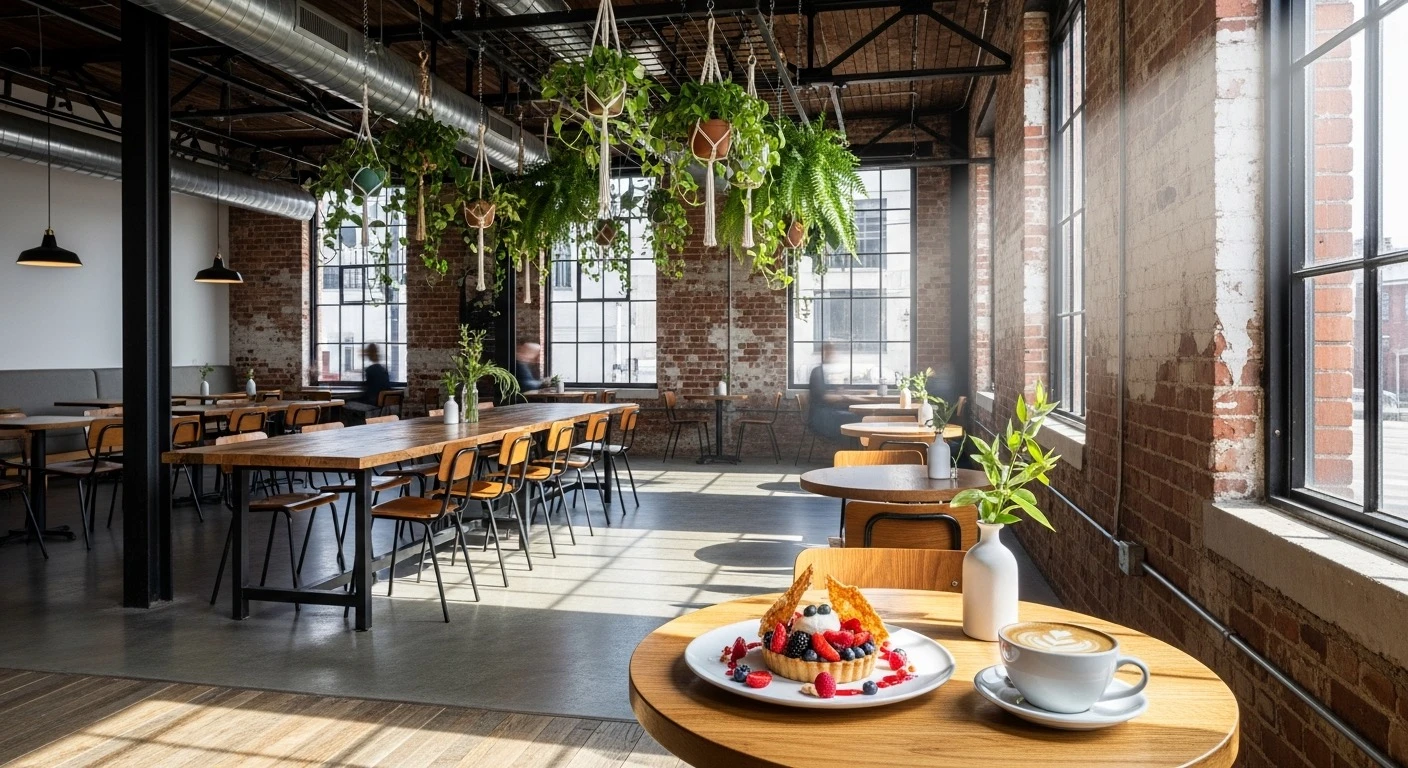
Korea’s cafe scene is heavily driven by aesthetics. Entire neighborhoods have become “cafe districts” where every block offers a more photogenic spot than the last.
Top Neighborhoods for Cafe-Hopping
Seongsu-dong (성수동) — Seoul’s “Brooklyn.” Former factories and warehouses converted into stunning cafes, galleries, and boutiques. This is ground zero for Korea’s aesthetic cafe movement. Must-visit: Cafe Onion (in a renovated 1970s factory), Daerim Warehouse.
Yeonnam-dong (연남동) — The area near Yeonnam Park (Gyeongui Line Forest) is packed with small, charming cafes with flower-filled interiors and creative menus. Great for a lazy afternoon walk between cafes.
Ikseon-dong (익선동) — Seoul’s oldest surviving hanok village, now reimagined as a trendy cafe and restaurant district. Sip specialty coffee in a traditional Korean house. The contrast of old architecture and modern cafe culture is incredibly photogenic.
Itaewon / Hannam-dong (이태원/한남동) — International and upscale. Rooftop cafes, designer interiors, and the occasional celebrity sighting. Great for specialty coffee and brunch cafes.
Bukchon Hanok Village (북촌한옥마을) — Traditional hanok cafes with views of tiled rooftops and Namsan Tower. Tourist-heavy but undeniably beautiful.
Jeju Island (제주도) — Jeju’s cafe scene is in a league of its own. Many cafes are architectural masterpieces with ocean views, set against volcanic landscapes. Worth a day trip just for the cafes.
Tips for Cafe-Hopping
- Go on weekdays if possible. Popular aesthetic cafes can have 30-minute+ waits on weekends.
- Check Instagram or Naver before visiting. Search the cafe name to see current menus and wait times. Many cafes post daily updates.
- Budget ₩15,000–₩20,000 per cafe. A drink plus a dessert at a trendy cafe typically runs ₩12,000–₩18,000.
Ordering & Payment: A Practical Guide
Kiosk Ordering
Many Korean cafes — especially franchise chains — use kiosk ordering systems instead of counter staff. Here’s how it works:
- Walk up to the touchscreen kiosk
- Select your language (most kiosks have English)
- Browse the menu, customize your drink (size, ice level, sweetness)
- Pay by card (tap or insert) — most kiosks don’t accept cash
- Wait for your number to be called or displayed on a screen
Important: Some independent cafes still use traditional counter ordering. If you don’t see a kiosk, just go to the counter.
Kakao Order (카카오 주문하기)
Some cafes support ordering through KakaoTalk (Korea’s dominant messaging app). If you have KakaoTalk installed:
- Scan the QR code at the table or entrance
- Browse the menu in-app
- Order and pay through KakaoTalk Pay
- Your order is sent directly to the cafe
This is convenient but requires a Korean payment method linked to KakaoTalk. Most tourists will use the kiosk or counter instead.
Payment
- Card is king. Korea is nearly cashless. Almost every cafe accepts credit and debit cards, including international Visa and Mastercard.
- Samsung Pay / Apple Pay: Increasingly accepted, especially at franchise chains.
- Cash: Accepted at most places but increasingly uncommon. Some newer cafes are card-only (현금 없는 매장).
- Stamp cards: Many franchise chains have stamp/loyalty programs. Ask for a stamp card on your first visit — after 10 drinks, you typically get one free. Starbucks Korea uses its own app with a reward system.
Seasonal Cafe Culture
Cherry Blossom Season (Late March – Early April)
Cafes roll out pink everything — strawberry lattes, cherry blossom macarons, rose-colored drinks. Many cafes near popular cherry blossom spots (like Yeouido or Seokchon Lake) set up outdoor seating.
Summer (June – August)
Bingsu season. Every cafe competes for the best shaved ice creation. Expect lines at popular bingsu spots. Fruit ades (fresh fruit blended with sparkling water) and cold brew become the default orders.
Autumn (September – November)
Sweet potato and chestnut flavors dominate. “Goguma latte” (sweet potato latte) is a Korean cafe classic. Pumpkin-flavored drinks appear alongside warming spiced teas.
Winter (December – February)
Hot chocolate, yuzu citrus tea (유자차), and ginger teas become staples. Many cafes have heated seats (온돌) or blankets for outdoor terraces. Winter-limited holiday drinks and packaging drive long lines at Starbucks.
Final Tips
- Don’t skip the “cheap” chains. Mega Coffee and Paik’s Coffee offer genuinely good coffee at a fraction of the price. Not every great cafe experience needs to cost ₩7,000.
- Try at least one traditional fusion dessert. Whether it’s a yakgwa latte, injeolmi bingsu, or black sesame cake — these flavors are uniquely Korean and you won’t find them back home.
- Use Naver Map for cafe discovery. Naver Map (Korea’s dominant map app) shows real-time cafe ratings, photos, menus, and even current wait times. It’s more accurate than Google Maps for Korean cafes.
- Consider a cafe as your “rest stop.” After hours of walking and sightseeing, a Korean cafe is the perfect place to recharge. Air-conditioned in summer, heated in winter, quiet, and comfortable — with WiFi and outlets.
- Embrace the culture. In Korea, spending 2-3 hours in a cafe isn’t lazy — it’s normal. Order a drink, maybe a pastry, people-watch, plan your next destination, and enjoy the atmosphere. That’s exactly what everyone around you is doing.
Have a favorite cafe in Korea? Share your recommendations in the comments below!