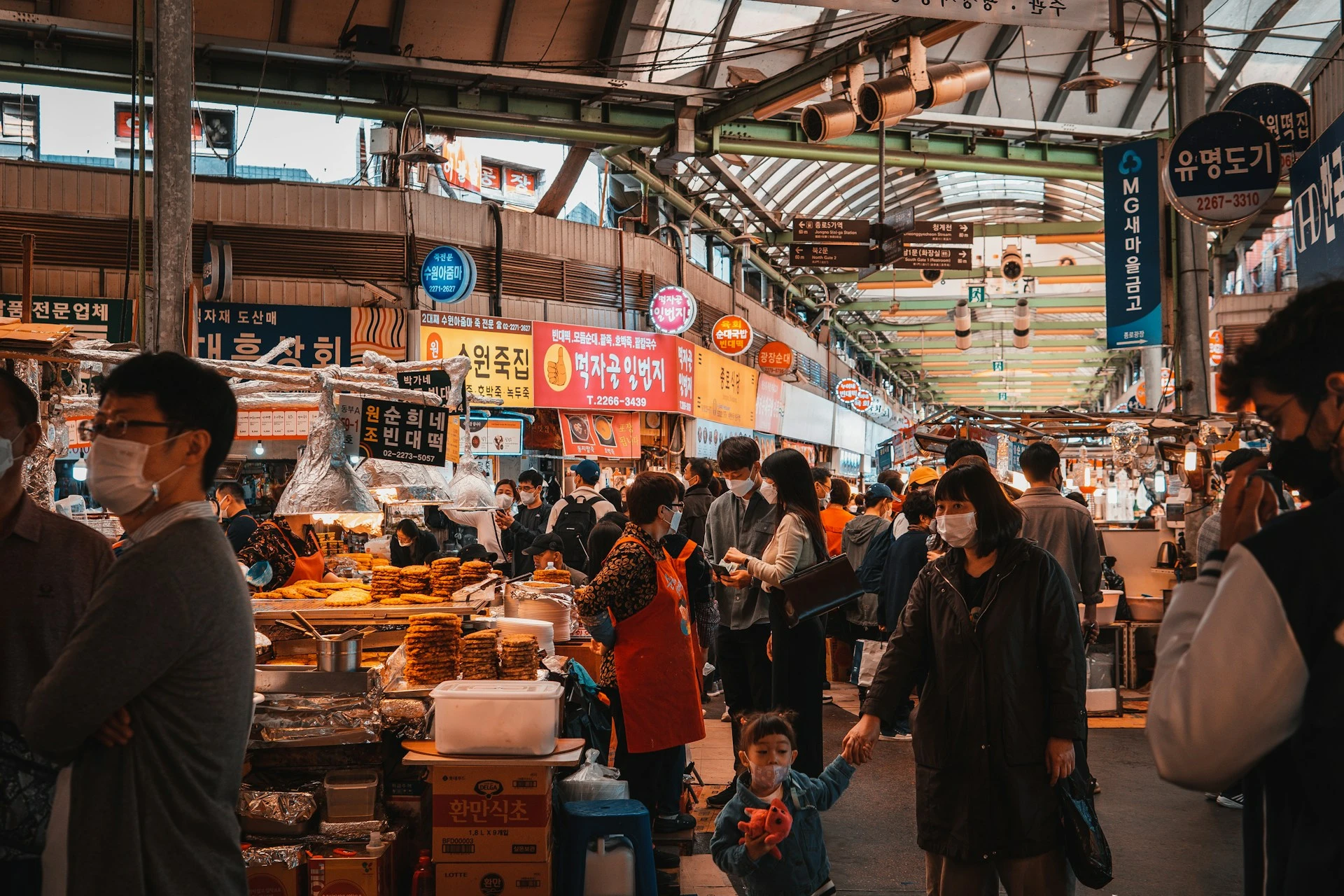
The Complete Guide to Ordering Food in Korea (Without Speaking Korean)
Key Takeaways
- Water, side dishes (banchan), and refills are free at Korean restaurants — serve yourself and ask for more
- Most restaurants use one of three ordering systems: speaking to staff, self-service kiosks, or tablet ordering
- Google Translate’s camera mode is your best friend for reading Korean menus in real time
- Korea has a strong solo dining culture — but some dishes require a minimum of 2 servings
- No tipping in Korea, ever — and almost everywhere accepts credit cards, even for small amounts
Walking into a Korean restaurant for the first time can feel like stepping into another dimension. There’s a button on the table. Nobody brought you water. The menu is entirely in Korean. And wait — are those side dishes free?
Yes, they are. And that’s just the beginning of what makes eating in Korea uniquely wonderful (and occasionally confusing) for first-time visitors.
This guide covers everything you need to know to eat like a local — from decoding menus and navigating kiosks to understanding why your server hasn’t checked on you once (spoiler: it’s not rude, it’s by design).
Restaurant Etiquette: The Unwritten Rules
Before you even think about ordering, here are the customs that catch most foreigners off guard:
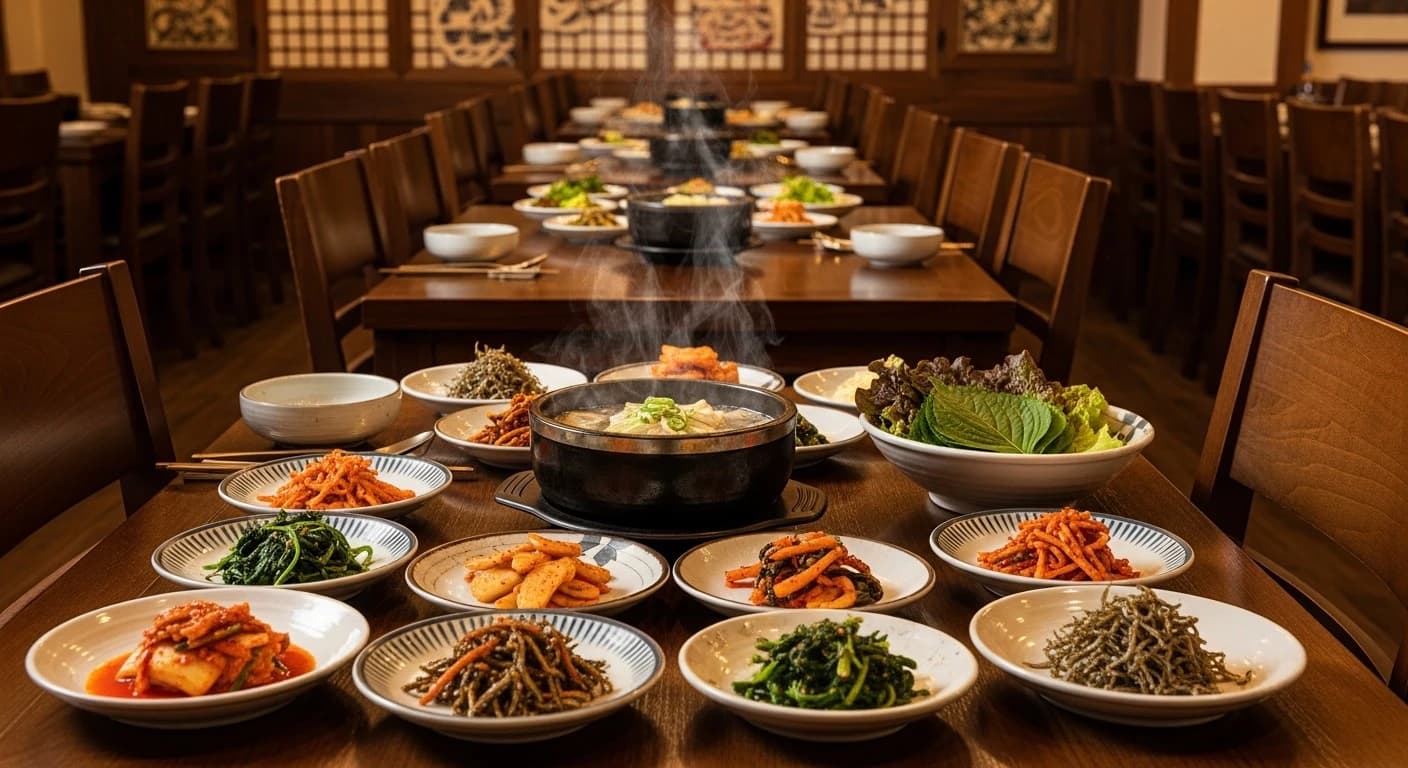
Water and Banchan Are Self-Service (and Free)
In most Korean restaurants, you’ll find a water dispenser or water jug somewhere in the dining area. Grab a cup and pour your own. Nobody is coming to fill your glass.
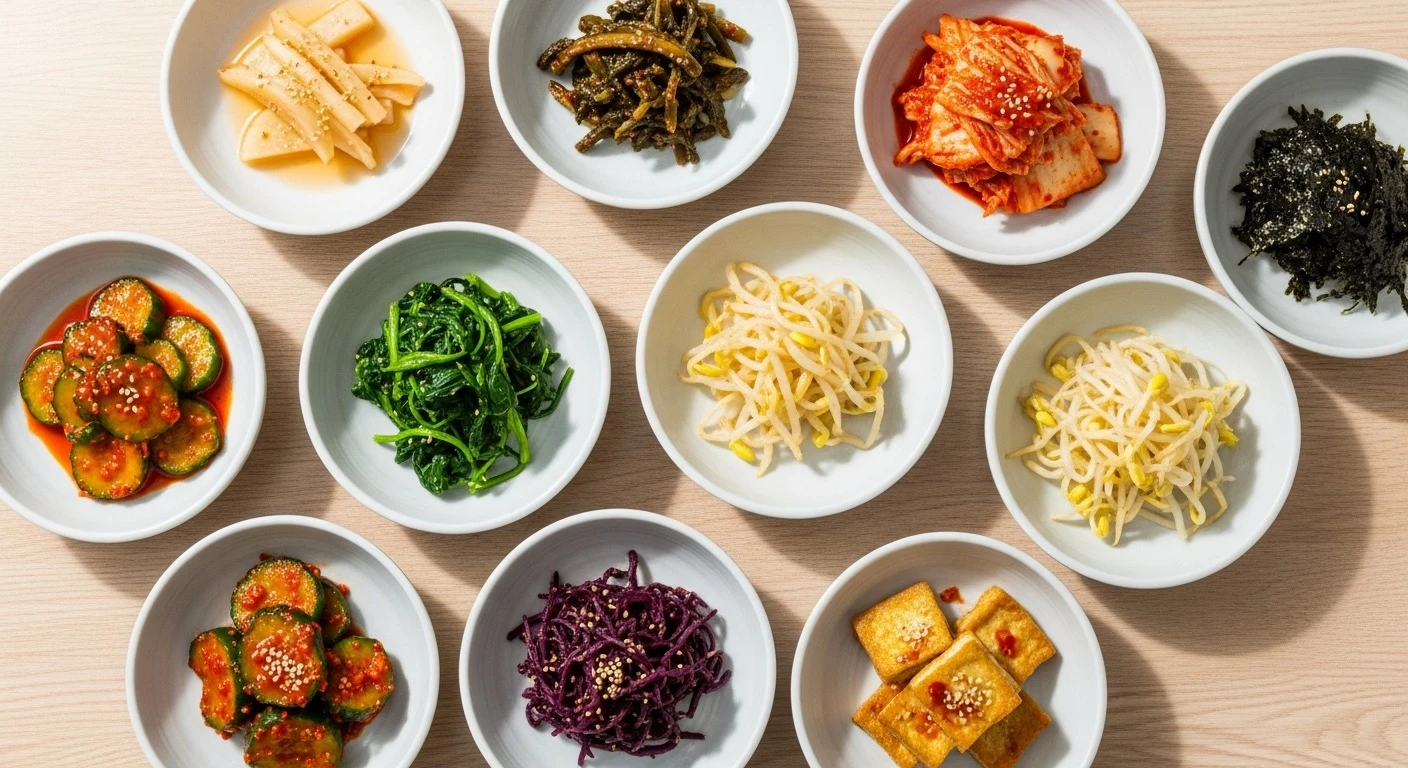
The same goes for banchan (반찬) — those small side dishes like kimchi, pickled radish, and seasoned vegetables. They come free with every meal, and you can ask for refills as many times as you want. Just catch a staff member’s attention and say “반찬 더 주세요” (banchan deo juseyo — “more side dishes please”) or simply point at the empty dish.
The Call Button Is Your Best Friend
Most Korean restaurants have a call button (호출벨) on each table. Press it when you’re ready to order, need something, or want the check. Staff won’t hover around your table or interrupt your meal to ask “How’s everything?” — they’ll come when you call.
No button? Just call out “여기요!” (yogiyo! — “over here!”) and raise your hand. It feels weird the first time, but it’s completely normal and expected.
Shoes Off (Sometimes)
Some traditional Korean restaurants have floor seating where you’ll need to remove your shoes before stepping onto the raised platform. Look for a shoe rack or other shoes lined up at the edge. If the seating area is elevated and has cushions on the floor, shoes off.
Sharing Is the Default
Korean food is inherently communal. Many dishes — stews (찌개), grilled meat (고기), hot pots (전골) — are served in the center of the table for everyone to share. Even rice is sometimes served in a large shared pot. This is why portions are often listed as “2 servings minimum” rather than “per person.”
How to Order: Three Systems You’ll Encounter
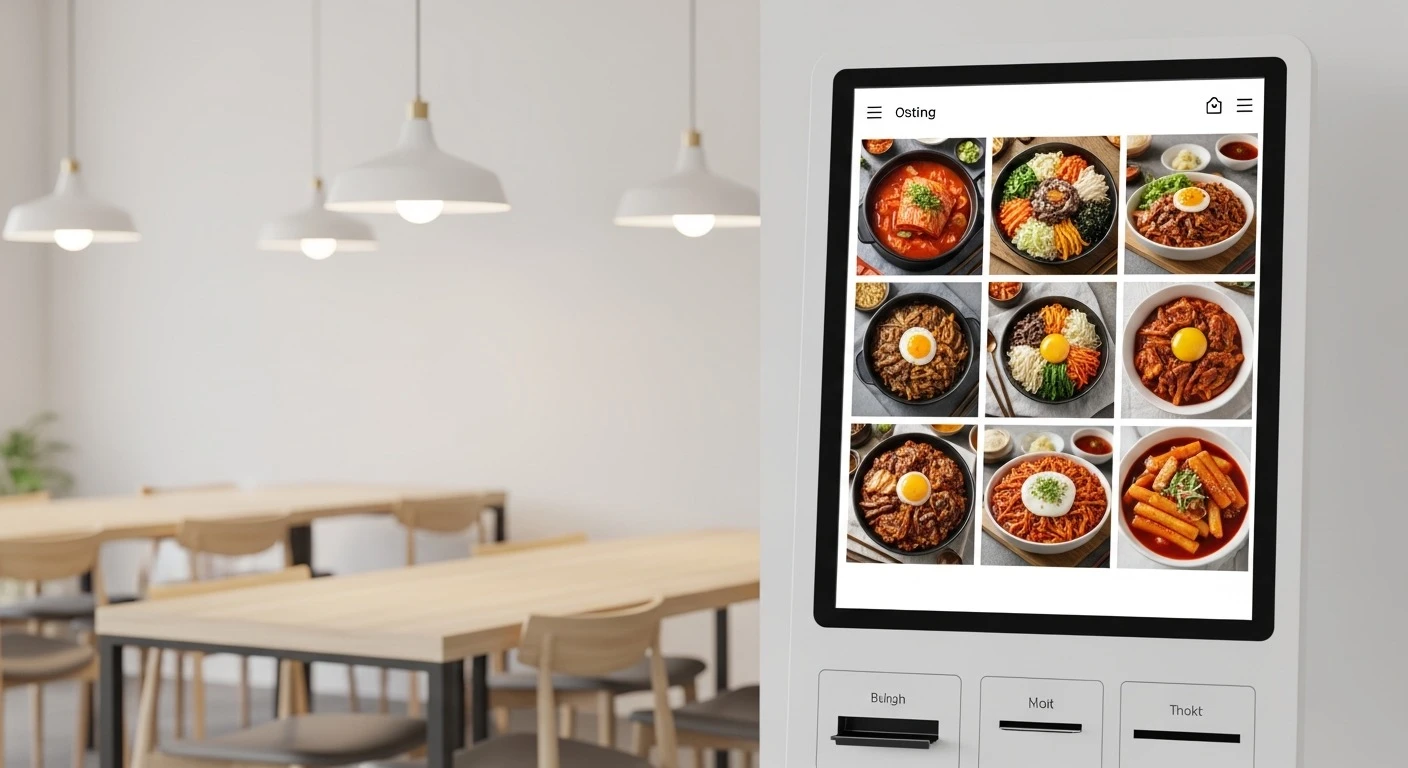
Korea has rapidly modernized its restaurant ordering systems. Depending on where you eat, you’ll encounter one of three methods:
1. Traditional Ordering (Staff Takes Your Order)
This is what you’re used to. Sit down, look at the menu, press the call button (or shout “여기요!”), and point at what you want. Many restaurants have picture menus or display food models outside, making this easier than you’d think.
Survival phrases:
- “이거 주세요” (igeo juseyo) — “This one, please” (while pointing)
- “이거 하나” (igeo hana) — “One of this”
- “이거 두 개” (igeo du gae) — “Two of this”
- “메뉴 주세요” (menyu juseyo) — “Menu, please”
2. Kiosk Ordering (키오스크)
Touch-screen kiosks are everywhere in Korea — fast food chains, casual restaurants, cafes, and even some traditional Korean restaurants. You order and pay at the machine before sitting down.
How to navigate a kiosk:
- Look for a language button — many kiosks now have English, Japanese, and Chinese options (usually a flag icon in the corner)
- If there’s no English option, look at the food photos — most items have clear pictures
- Select your items, customize options (size, spice level), and pay
- You’ll get a receipt with an order number — wait for your number to be called or displayed on a screen
- Kiosks accept credit/debit cards and sometimes cash. Some accept mobile payments like Samsung Pay or Apple Pay
Pro tip: If the kiosk is all in Korean and you’re lost, don’t panic. Take a photo of the screen and use Google Translate’s camera feature to translate it in real time.
3. Tablet Ordering (태블릿 주문)
Increasingly common in mid-range restaurants and chains. A tablet on your table lets you browse the full menu with photos, select items, and send the order directly to the kitchen. Many tablets have an English language option. Same concept as a kiosk, but you order from your seat.
Reading the Menu: You Don’t Need to Speak Korean
Even if the menu is 100% in Korean with no pictures, you have options:
Google Translate Camera Mode
This is the single most useful tool for eating in Korea. Open Google Translate, switch to Korean → English, tap the camera icon, and point it at the menu. It translates text in real time, overlaying English on top of the Korean characters. It’s not perfect, but it’s surprisingly good for food menus.
Download the Korean language pack offline before your trip so it works without Wi-Fi.
Essential Food Vocabulary
You don’t need to be fluent. Knowing just these words will unlock 80% of Korean menus:
| Korean | Romanization | English |
|---|---|---|
| 밥 | bap | Rice |
| 면 | myeon | Noodles |
| 국/탕 | guk/tang | Soup |
| 찌개 | jjigae | Stew |
| 고기 | gogi | Meat |
| 소고기 | sogogi | Beef |
| 돼지고기 | dwaejigogi | Pork |
| 닭고기 | dakgogi | Chicken |
| 해물 | haemul | Seafood |
| 김치 | gimchi | Kimchi |
| 볶음 | bokkeum | Stir-fried |
| 구이 | gui | Grilled |
| 튀김 | twigim | Fried |
| 비빔 | bibim | Mixed |
| 세트 | seteu | Set meal |
| 1인분 | 1-inbun | 1 serving/portion |
So when you see 돼지고기 볶음, you can decode it as “pork + stir-fried” — pork stir-fry. 소고기 국 = beef soup. You’re already reading Korean menus.
Picture Menus and Food Displays
Many restaurants — especially in tourist areas — have menus with photos, or display plastic food replicas in their window. Point-and-order is a perfectly valid strategy.
Solo Dining (혼밥): Eating Alone Like a Pro
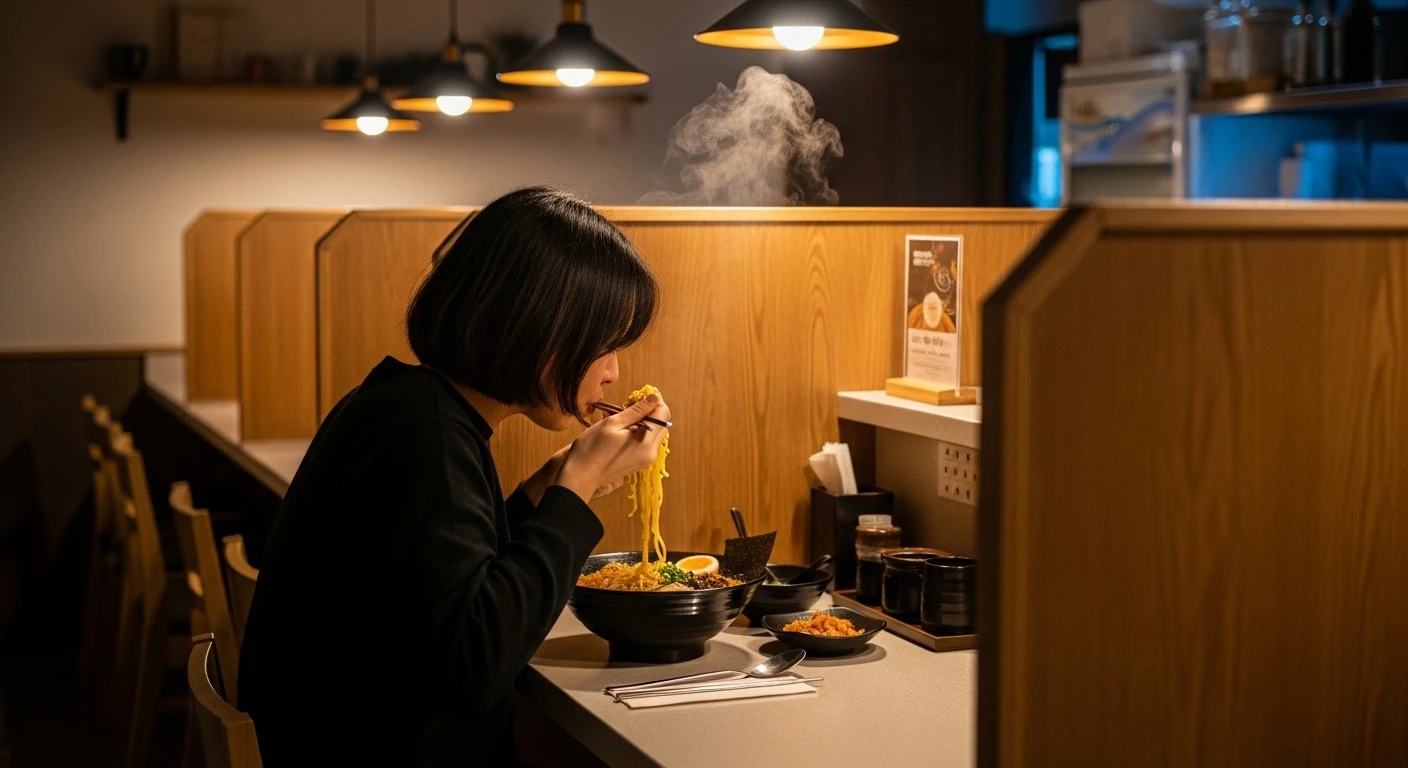
Korea has a thriving 혼밥 (honbap) culture — eating alone. It’s so common that there’s a dedicated word for it, and an entire ecosystem of restaurants designed for solo diners.
Where Solo Dining Is Easy
- 분식집 (bunsikjip): Casual snack restaurants serving tteokbokki, kimbap, ramyeon, and dumplings. Always solo-friendly.
- 국밥집 (gukbapjip): Rice-in-soup restaurants. Order one bowl, eat, leave. Perfect solo meal.
- 1인 식당: Restaurants specifically designed for solo diners, often with counter seating and individual partitions. Common in business districts.
- Fast food and cafes: Obviously solo-friendly.
- Convenience stores: The ultimate solo dining experience (more on this later).
Where Solo Dining Is Tricky
Some dishes are communal by nature and many restaurants enforce a minimum 2-serving policy (2인분 이상). This typically applies to:
- Korean BBQ (삼겹살, 갈비): Most BBQ places require at least 2 servings. Some newer places offer 1-person BBQ, but they’re less common.
- 전골 (jeongol): Large shared hot pots, typically 2+ servings.
- 찜 (jjim): Braised dishes like 갈비찜, usually made for sharing.
Workaround: Look for restaurants that specifically advertise “1인분 가능” (single serving available) or search for “혼밥 맛집” (solo dining restaurants) on Naver Map or Google Maps in the area you’re visiting.
Price Guide: What Things Actually Cost
Korea offers incredible value for food, especially compared to Japan or Western countries. Here’s what to expect:
| Category | Price Range | Examples |
|---|---|---|
| Street food | ₩1,000–₩5,000 | Tteokbokki, fish cake, hotteok, corn dog |
| Convenience store meal | ₩1,500–₩5,000 | Triangle kimbap (₩1,200), lunch box (₩3,500–₩4,500) |
| Bunsik (분식) | ₩3,000–₩7,000 | Kimbap roll, ramyeon, tteokbokki |
| Average restaurant meal | ₩8,000–₩15,000 | Bibimbap, kimchi jjigae, cold noodles |
| Korean BBQ | ₩15,000–₩25,000 | Per person (usually 2+ servings required) |
| Nice restaurant | ₩20,000–₩40,000 | Hanwoo beef, sashimi, upscale Korean cuisine |
Set meals (세트) are often the best deal. A ₩9,000 doenjang jjigae set at a typical restaurant will come with rice, soup, and 4-5 banchan dishes — a complete meal.
Payment: Cards Rule, Cash Drools
Korea is one of the most cashless societies on Earth. Here’s what you need to know:
- Credit/debit cards are accepted almost everywhere — even tiny hole-in-the-wall restaurants, street food stalls, and convenience stores
- Visa and Mastercard work at virtually all locations. Amex is less common.
- Mobile payments: Samsung Pay works everywhere. Apple Pay is accepted at major franchise chains and department stores, but acceptance remains limited (~10% of merchants) due to NFC terminal compatibility.
- Cash: You can use it, but many Koreans go weeks without touching physical money. Some newer restaurants are actually card-only (현금 불가).
- Minimum purchase: Unlike some countries, there’s usually no minimum for card payments. You can pay ₩1,200 for a triangle kimbap with a card and nobody will blink.
No Tipping. Seriously.
Tipping does not exist in Korea. Don’t leave money on the table — staff may chase you down thinking you forgot your change. It’s not expected, not customary, and can even cause confusion. The price on the menu is what you pay. Done.
Delivery Apps: Restaurant Food at Your Door
Korea’s delivery culture is legendary. You can get virtually anything delivered — from a single cup of coffee to a full Korean BBQ setup with a portable grill.
The Big Three Apps
| App | English Support | Notes |
|---|---|---|
| 배달의민족 (Baemin) | Partial | Korea’s #1 delivery app. Some English UI, but menus are mostly Korean. Best selection. |
| 쿠팡이츠 (Coupang Eats) | Yes | Good English support. Linked to Coupang (Korea’s Amazon). Easy to use for foreigners. |
| 요기요 (Yogiyo) | Partial | Decent coverage. Less English support than Coupang Eats. |
Can Foreigners Actually Use These?
Yes, but with some friction:
- You’ll need a Korean phone number (get a local SIM or eSIM)
- Coupang Eats has the best English support, though registration typically requires a Korean phone number for identity verification
- Baemin technically requires Korean payment methods, but you can register with a foreign card in some cases
- Delivery to hotels: Use the hotel’s Korean address. The driver will call when they arrive — having your hotel’s front desk help is a good backup plan
- Alternative: If apps are too complicated, ask your hotel or Airbnb host to order for you. Most are happy to help.
Delivery Fees and Minimums
- Delivery fee: typically ₩0–₩4,000 (many restaurants offer free delivery over a minimum order)
- Minimum order: usually ₩10,000–₩15,000
- Peak hours (lunch/dinner rush): delivery times can stretch to 40-60 minutes
Dietary Restrictions: The Honest Truth
Let’s be real: Korea is not an easy country for vegetarians, vegans, or those with dietary restrictions. But it’s not impossible. Here’s the honest breakdown:
Vegetarian/Vegan
The challenge is that many Korean dishes that look vegetarian contain hidden animal products:
- Kimchi often contains fermented shrimp paste (젓갈)
- Soups are frequently made with anchovy or beef broth
- Banchan may be seasoned with fish sauce or shrimp paste
What you can do:
- Say “고기 빼주세요” (gogi ppae-juseyo — “no meat please”) and “해물 빼주세요” (haemul ppae-juseyo — “no seafood please”)
- Look for 사찰음식 (sachal eumsik) — Buddhist temple food, which is traditionally vegan
- 비건 식당 (vegan restaurants) exist in Seoul, especially in Itaewon, Gangnam, and Hongdae. Search “vegan” on Google Maps or the HappyCow app
- Convenience store options: plain kimbap, vegetable dumplings (야채만두), and some rice bowls are safe bets — but always check the label or scan it with Google Translate
Halal
Halal options are growing but still limited:
- Itaewon has the highest concentration of halal restaurants, near the Seoul Central Mosque
- Some Korean fried chicken chains offer halal-certified branches
- The Korea Tourism Organization has a halal restaurant guide on their website
- Many Korean dishes are naturally pork-free if you choose chicken or beef options, but cross-contamination in shared kitchens is common
Allergies
Korea does not have the same allergen labeling culture as Western countries. Restaurants rarely list allergens on menus.
What you can do:
- Learn the Korean word for your allergen (e.g., 땅콩 = peanut, 우유 = milk, 밀 = wheat, 계란 = egg, 새우 = shrimp)
- Carry a written allergy card in Korean explaining your allergy. Several websites offer free downloadable allergy cards in Korean.
- For severe allergies, stick to restaurants where you can clearly see what goes into your food, or communicate directly with staff using a translation app
The Budget Hero: Convenience Store Meals
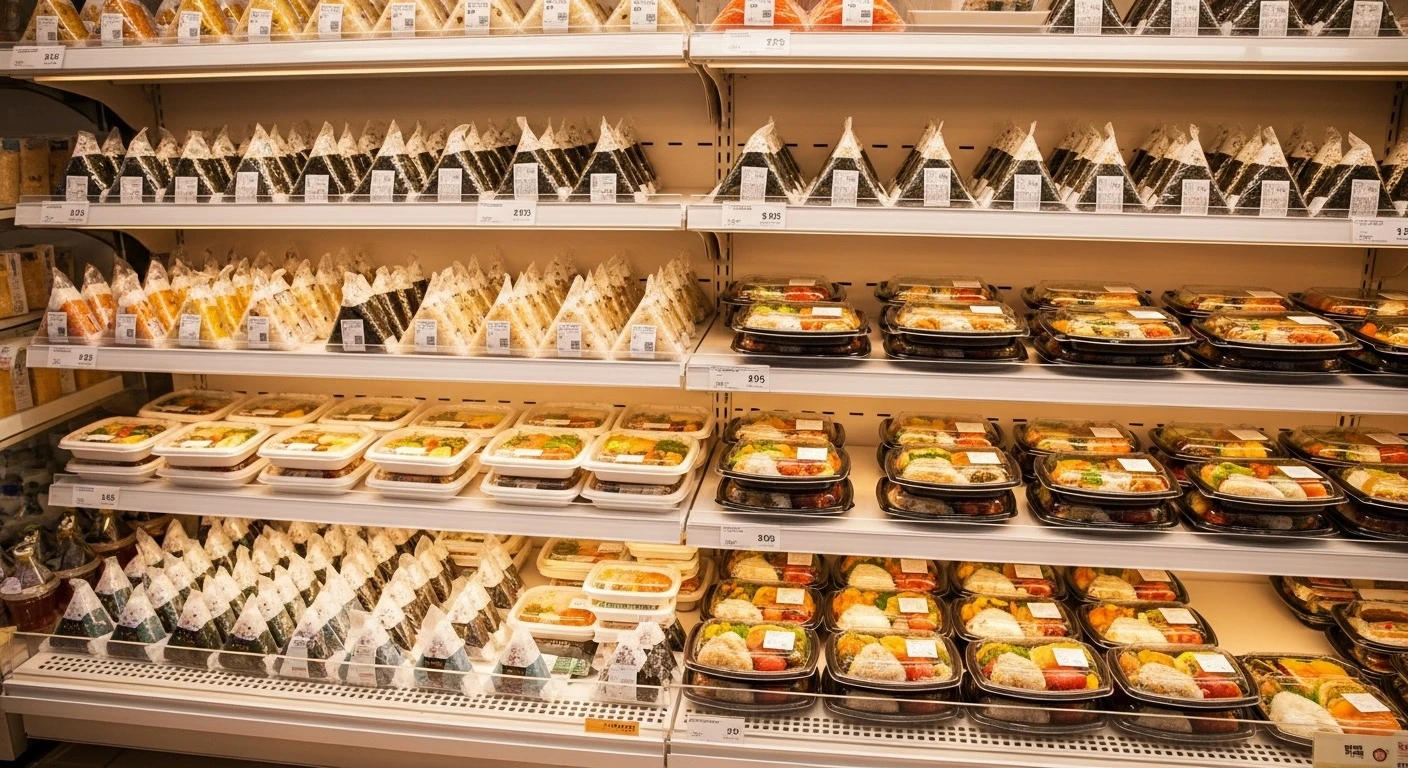
If you’re traveling on a budget — or it’s 2 AM and everything else is closed — Korean convenience stores are a revelation. CU, GS25, 7-Eleven, and Emart24 are on literally every block, open 24/7, and serve surprisingly good food.
Best Convenience Store Picks
| Item | Price | What It Is |
|---|---|---|
| 삼각김밥 (triangle kimbap) | ₩1,200–₩1,500 | Rice triangle with various fillings (tuna, bulgogi, kimchi). The ultimate cheap snack. |
| 도시락 (lunch box) | ₩3,500–₩5,000 | Complete meals with rice, meat, and sides. Microwave at the in-store station. |
| 컵라면 (cup ramyeon) | ₩1,200–₩2,000 | Instant noodles. Hot water dispenser is always available for free. |
| 김밥 (kimbap roll) | ₩2,000–₩3,500 | Full-size seaweed rice rolls with various fillings. |
| 샌드위치 (sandwich) | ₩2,500–₩4,000 | Egg sandwiches, club sandwiches — better than you’d expect. |
| 바나나맛 우유 (banana milk) | ₩1,700~₩1,800 | Korea’s iconic banana-flavored milk. You have to try it. |
Pro Tips for Convenience Store Dining
- Microwave and hot water are always available for free — just ask or help yourself
- Most stores have a small eating area with a counter and sometimes seats
- Combo deals (1+1 or 2+1 promotions) are constantly running — check the stickers on products
- The GS25 and CU apps have English interfaces and sometimes offer digital coupons
- Late-night convenience store ramyeon after a night out is a genuine Korean cultural experience
Quick Reference: Your First Restaurant Visit
Here’s a step-by-step cheat sheet for your first time eating at a Korean restaurant:
- Enter and find a seat (many restaurants are seat-yourself)
- Get water from the self-service dispenser
- Check the ordering method — look for a call button, kiosk, or tablet
- Order — point at pictures, use Google Translate camera, or use the basic phrases
- Banchan arrives automatically — dig in, and ask for refills if you want more
- Eat and enjoy — communal dishes go in the center, rice and personal bowls stay with you
- Pay at the counter when leaving (most restaurants have a register near the exit, not table-side payment). Card is fine.
- No tip. Just leave.
Have questions about eating in Korea? Drop a comment below and we’ll help you navigate the delicious chaos!