The Complete Guide to Train Travel in Korea: KTX, Korail Pass, and the Best Routes
Key Takeaways
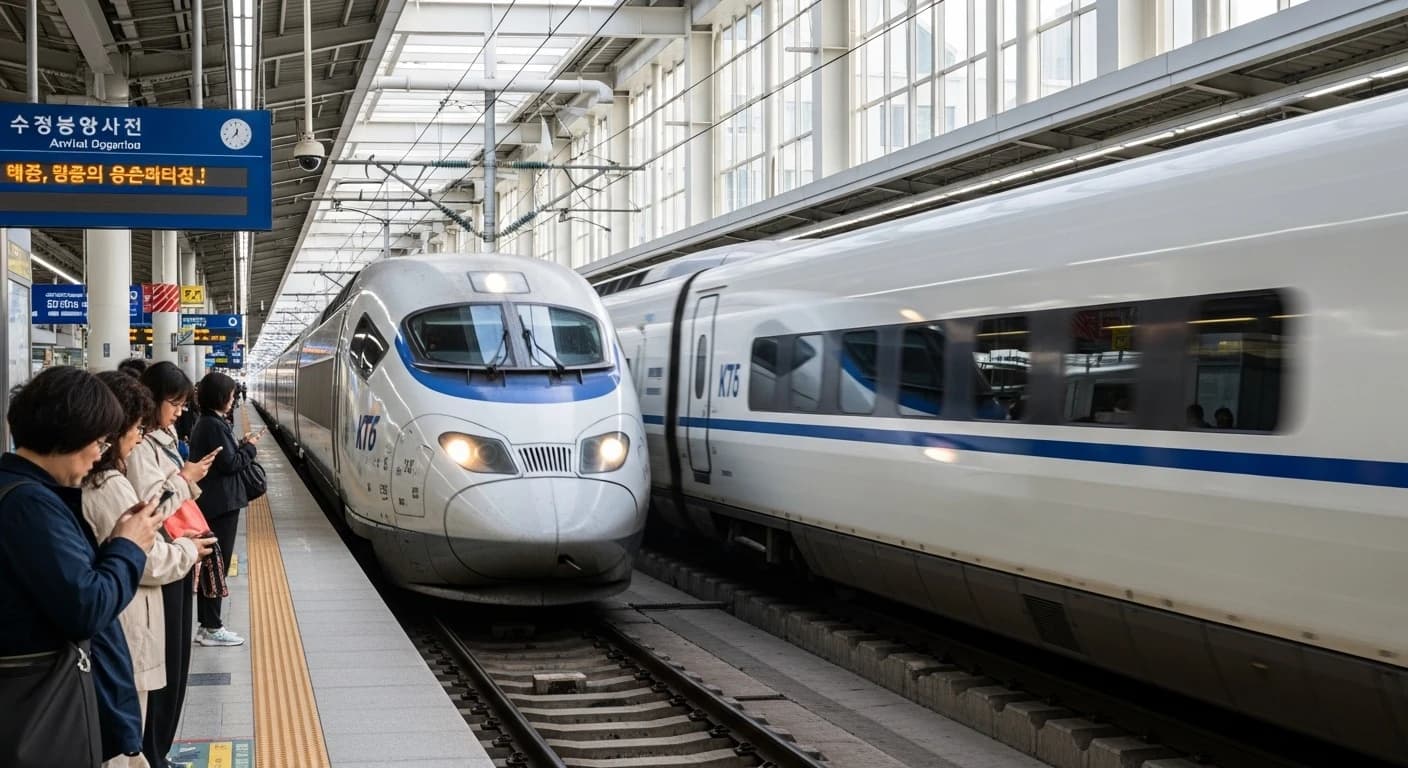
- KTX is Korea’s bullet train — it connects Seoul to Busan in just 2 hours 30 minutes at speeds up to 305 km/h
- Four train tiers exist (KTX, KTX-Eum, ITX-Saemaeul, Mugunghwa), each balancing speed and price differently
- The Korail Pass (KR Pass) offers foreigners unlimited rides for 2–5 days and can save you serious money on multi-city trips
- Book online through the Korail app or website (both support English) — or buy tickets at station kiosks and counters
- Reserve weekend and holiday trains at least 1 week in advance — popular routes like Seoul-Busan sell out fast
Korea has one of the best railway systems in Asia, and it’s one of the most efficient ways to explore the country. The KTX bullet train can get you from Seoul to the beaches of Busan in about the same time it takes to watch a movie. Slower trains cost less and let you soak in the countryside scenery. And for foreign visitors, the Korail Pass offers unlimited rides at a fixed price.
Whether you’re planning a weekend trip to Gangneung’s coffee street, a cultural pilgrimage to Gyeongju’s ancient temples, or a food crawl through Jeonju’s hanok village, trains are the fastest, most comfortable, and most reliable way to get there.
Here’s everything you need to know.
Types of Trains in Korea
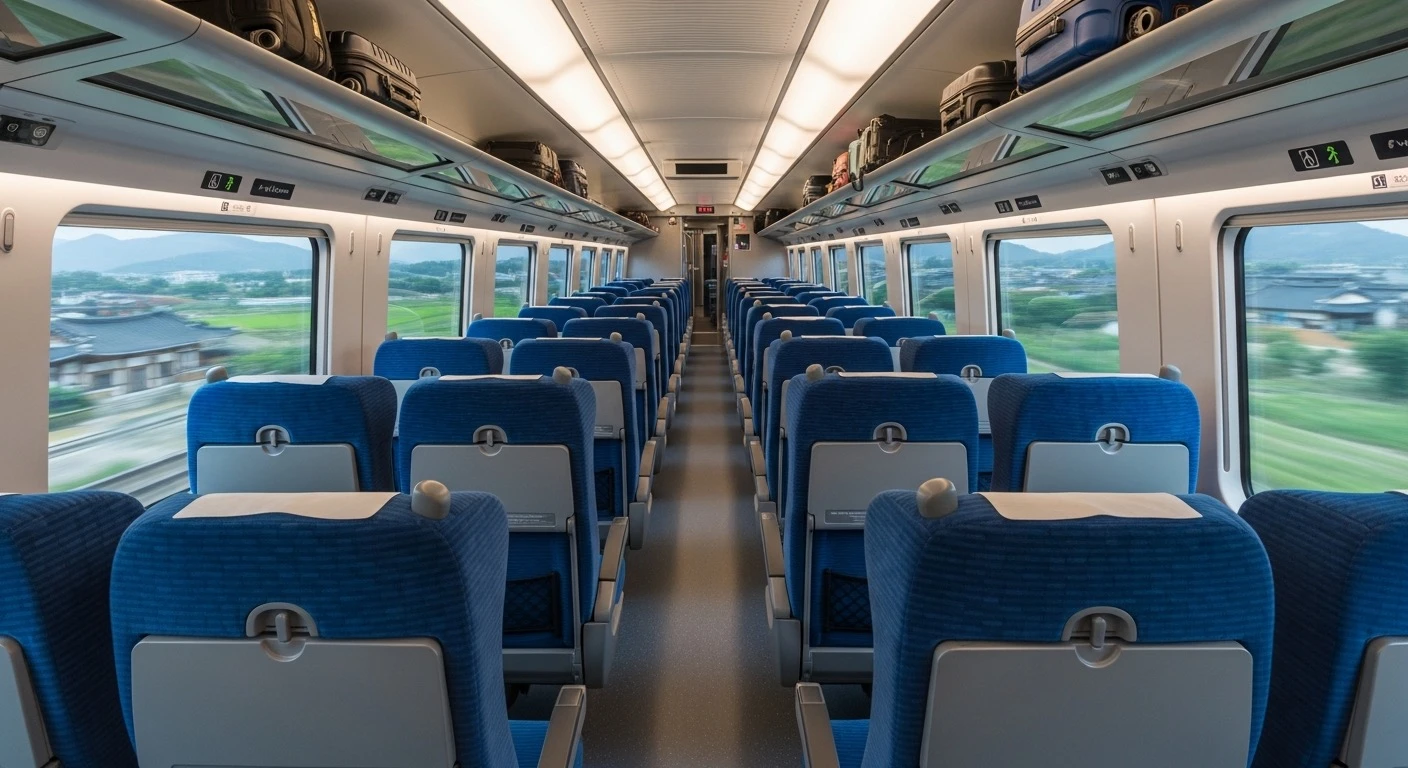
Korea’s national railway operator, Korail, runs four main types of trains. Each serves a different purpose, and understanding the differences will help you pick the right one for your trip.
KTX (Korea Train Express)
The flagship. Korea’s high-speed bullet train reaches up to 305 km/h and connects major cities across the country. KTX is the fastest and most popular option for long-distance travel.
- Seoul to Busan: 2 hours 30 minutes
- Seat classes: Standard and First Class (wider seats, more legroom, complimentary snacks)
- Routes: Gyeongbu Line (Seoul-Busan), Honam Line (Seoul-Mokpo), Gyeongjeon Line (Seoul-Jinju), and more
KTX-Eum
A newer, semi-high-speed train that serves routes where full KTX speed isn’t needed or the tracks don’t support it. It’s slightly slower but offers a modern, comfortable ride.
- Primary route: Seoul to Gangneung (about 2 hours)
- Also serves: Jungang Line and other regional routes
- Advantage: Newer cars with USB charging ports and wider windows
ITX-Saemaeul
The limited express — faster than a regular train, cheaper than KTX. A solid middle-ground option if you want to save money and don’t mind a bit of extra travel time.
- Speed: Around 150 km/h
- Good for: Medium-distance routes where KTX doesn’t run frequently
- Comfort: Spacious reclining seats, quieter than Mugunghwa
Mugunghwa
The classic commuter train — the slowest and cheapest option. It stops at nearly every station, making it ideal for reaching smaller towns that KTX skips.
- Speed: Around 100–120 km/h
- Best for: Budget travelers, rural destinations, scenic rides
- Vibe: A bit old-school, but reliable and affordable
Train Comparison at a Glance
| Train | Top Speed | Seoul → Busan | Price Range | Seat Classes |
|---|---|---|---|---|
| KTX | 305 km/h | ~2h 30m | ₩59,800 | Standard, First |
| KTX-Eum | 260 km/h | N/A (Gangneung: ~2h) | ₩27,600 (Gangneung) | Standard, First |
| ITX-Saemaeul | 150 km/h | ~4h 30m | ₩42,600 | Standard |
| Mugunghwa | 120 km/h | ~5h 30m | ₩28,600 | Standard |
Prices shown are one-way standard class fares as of 2025. Actual fares may vary slightly.
How to Book Your Train
Option 1: Korail App & Website (Recommended)
The Let’s Korail app and the Korail website both support English. This is the easiest way to book, especially for foreigners.
How to book online:
- Download the “Korail Talk” or “Let’s Korail” app (available on iOS and Android)
- Switch to English in the settings
- Select your departure/arrival stations and date
- Choose your train and seat
- Pay with an international credit card (Visa, Mastercard accepted)
- Your e-ticket is stored in the app — no need to print
Pro tip: Tickets open 1 month before departure. For popular routes on weekends and holidays, set a reminder and book as soon as tickets open.
Option 2: At the Station
If you prefer buying in person, you have two choices:
- Ticket counter: Head to the staffed window. Most agents at major stations (Seoul, Busan, Daejeon) speak basic English. Just tell them your destination, date, and preferred time.
- Self-service kiosk: Touchscreen machines available in English. Insert cash or card, select your route, and grab your printed ticket. The interface is straightforward, but avoid peak hours when lines are long.
Option 3: Korail Pass (KR Pass) — For Foreign Visitors
The Korail Pass is a rail pass exclusively for foreign tourists. It gives you unlimited rides on most Korail trains (including KTX) for a set number of days.
KR Pass Types and Prices (2025)
| Duration | Standard | Saver (2–5 people) |
|---|---|---|
| 2-Day Consecutive | ₩121,000 | ₩108,000/person |
| 3-Day Consecutive | ₩138,000 | ₩123,000/person |
| 4-Day Consecutive | ₩175,000 | ₩153,000/person |
| 5-Day Consecutive | ₩199,000 | ₩174,000/person |
| 2-Day Flexible (10-day window) | ₩131,000 | ₩117,000/person |
| 4-Day Flexible (10-day window) | ₩193,000 | ₩169,000/person |
Saver pass requires 2–5 people traveling together on the same itinerary.
Is the KR Pass Worth It?
Let’s do the math. If you’re planning a typical multi-city trip:
| Route | One-Way KTX Fare |
|---|---|
| Seoul → Busan | ₩59,800 |
| Busan → Gyeongju | ₩8,900 |
| Gyeongju → Seoul | ₩45,500 |
| Total | ₩114,200 |
A 2-Day Consecutive Pass costs ₩121,000 — slightly more than buying individual tickets for these three rides. But if you add even one more ride (say, Seoul → Gangneung), the pass pays for itself.
The rule of thumb: If you’re taking 3 or more KTX rides within your pass period, the Korail Pass almost always saves money.
How to Buy the KR Pass
- Online: Purchase at letskorail.com or authorized travel agencies (Klook, KKday, Trazy)
- Activate: No physical pass is needed — your pass number (received via email or the Korail app) is sufficient for seat reservations and boarding
- Seat reservations: Even with the pass, you need to reserve seats for each train. You can do this at ticket counters, kiosks, or through the app
Best Train Routes for Travelers
Seoul ↔ Busan
The classic. Korea’s most popular train route connects its two largest cities.
- Train: KTX
- Time: ~2 hours 30 minutes
- Fare: ₩59,800 (standard)
- Why go: Street food at Jagalchi Market, Haeundae Beach, Gamcheon Culture Village, incredible seafood
Seoul ↔ Gangneung
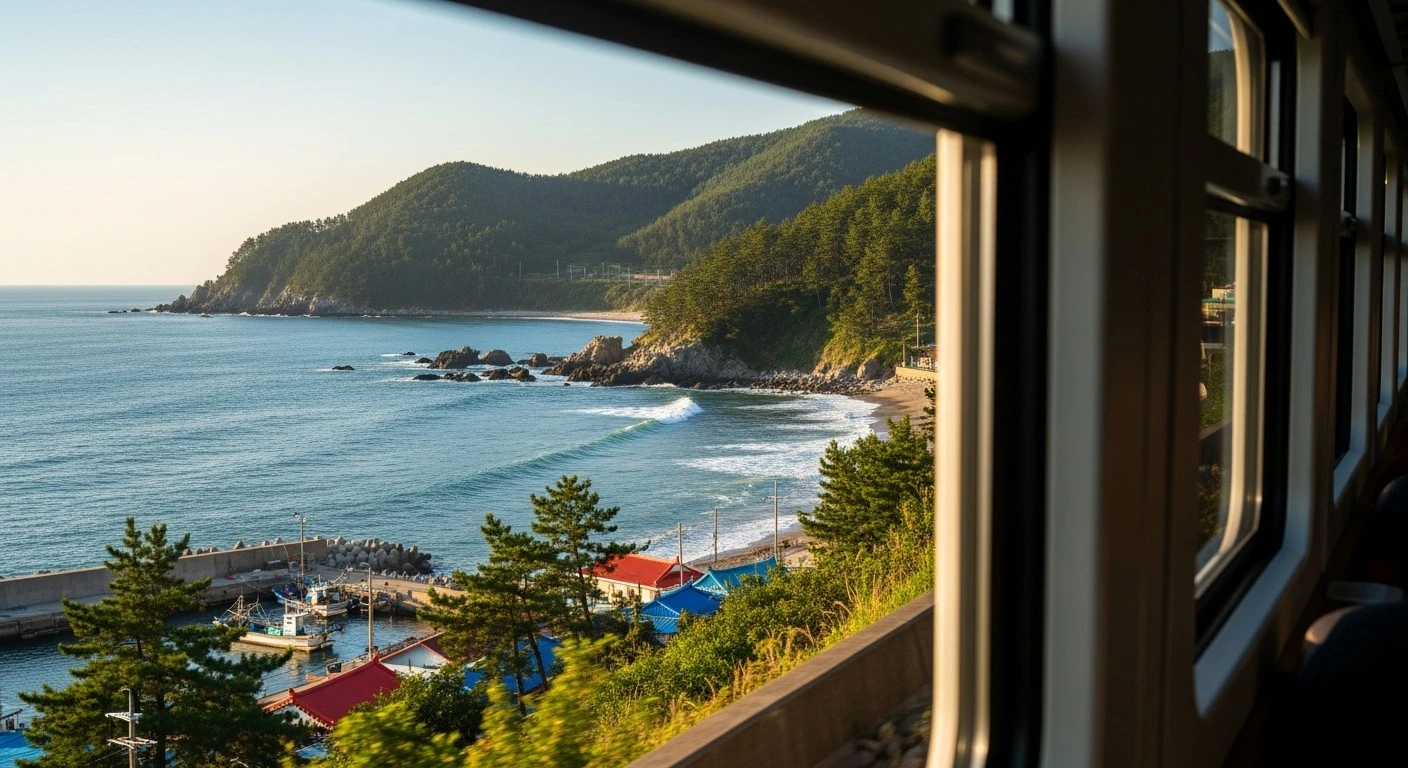
The coastal escape. The KTX-Eum takes you from the capital to the East Sea coast, made famous by the 2018 Winter Olympics.
- Train: KTX-Eum
- Time: ~2 hours
- Fare: ₩27,600 (standard)
- Why go: Gyeongpo Beach, Anmok Coffee Street, fresh seafood markets, Jumunjin breakwater (the BTS bus stop)
Seoul ↔ Jeonju
The food capital. Jeonju is Korea’s culinary heartland, famous for bibimbap, hanok village, and traditional culture.
- Train: KTX
- Time: ~1 hour 30 minutes
- Fare: ₩35,200 (standard)
- Why go: Jeonju Hanok Village, Nambu Market, the birthplace of bibimbap, traditional rice wine (makgeolli) bars
Seoul ↔ Gyeongju
The museum without walls. Gyeongju was the capital of the ancient Silla Kingdom for nearly a thousand years.
- Train: KTX
- Time: ~2 hours
- Fare: ₩45,500 (standard)
- Why go: Bulguksa Temple (UNESCO), Seokguram Grotto, ancient royal tombs, Anapji Pond at night
Seoul ↔ Yeosu
The ocean jewel. A beautiful port city on the southern coast, known for its stunning night sea views and fresh seafood.
- Train: KTX
- Time: ~3 hours
- Fare: ₩51,900 (standard)
- Why go: Yeosu Night Sea (the cable car at sunset), Odongdo Island, Dolsan Bridge, raw fish restaurants along the waterfront
Practical Tips for a Smooth Ride
Choosing the Best Seat
- Window seats: Look for seats ending in A (left window) or D (right window)
- Forward-facing: Korean trains have both forward and backward-facing seats. When booking, look for seats in the “forward direction” section on the English booking system
- First Class: Rows 1–4 in KTX cars. Worth it for trips over 2 hours — wider seats, more legroom, and it’s genuinely quiet
Luggage
- On the train: Large luggage racks are at the front and rear of each car. Smaller bags fit in the overhead compartments
- At the station: Major stations (Seoul, Busan, Daejeon, Gwangju) have coin lockers — ₩2,000–₩5,000 depending on size. Perfect for day trips
- No luggage limits: Unlike airlines, trains have no strict luggage restrictions. Bring whatever you can carry
Station Facilities
Major Korean train stations are mini shopping centers:
- Convenience stores (CU, GS25): Snacks, drinks, phone chargers — available at every station
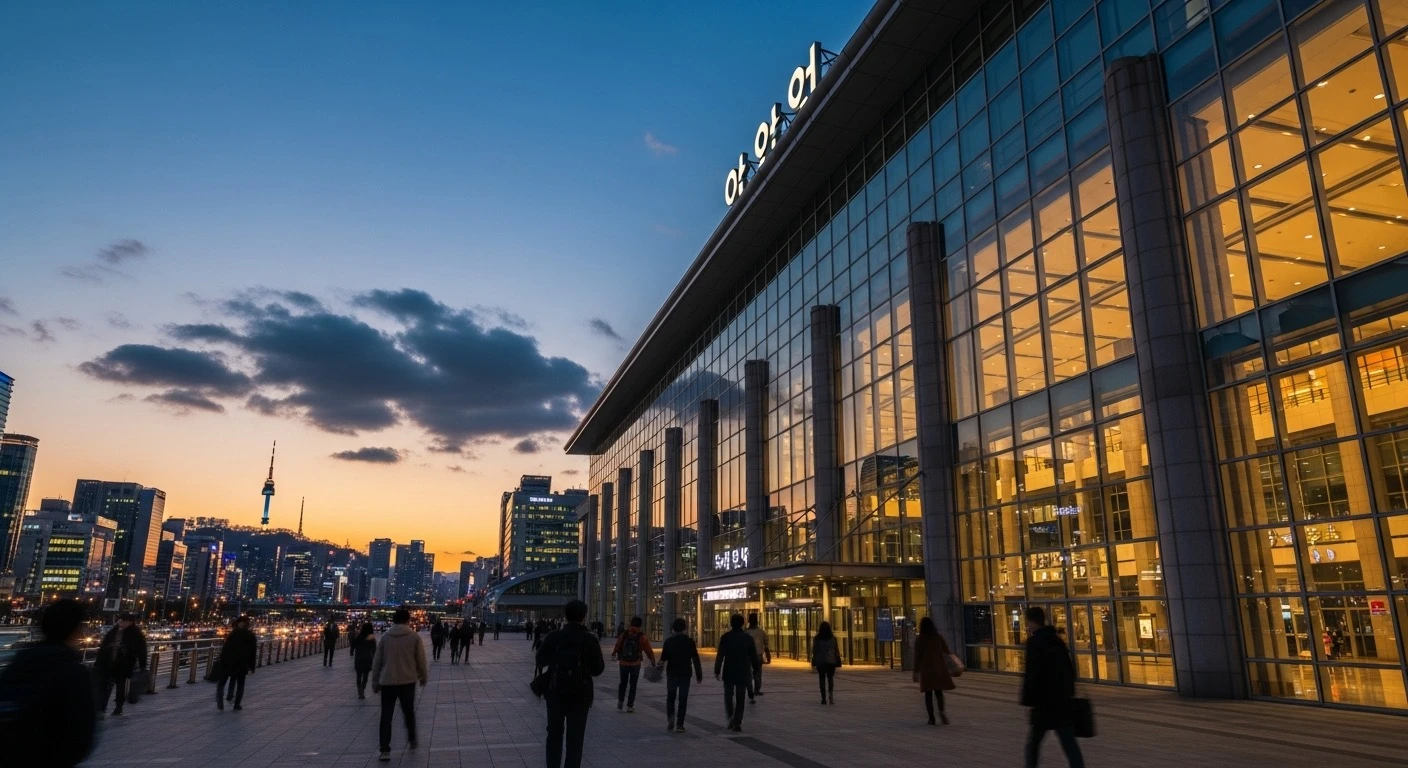
- Food courts and restaurants: Seoul Station has an entire underground food court. Busan Station has excellent options too
- Free Wi-Fi: Available at stations and on KTX trains (connection quality varies)
- Tourist information desks: Seoul Station and Busan Station have English-speaking staff
Weekend and Holiday Booking
This is critical: Korean trains sell out on weekends and holidays. Especially during:
- Chuseok (Korean Thanksgiving, usually September/October)
- Seollal (Lunar New Year, usually January/February)
- Summer vacation (late July–mid August)
- Cherry blossom season (late March–mid April)
Book at least 1 week in advance for weekend travel. For holidays, book as soon as tickets open (1 month before).
SRT: The Other High-Speed Option
Korea has a second high-speed train operator: SRT (Super Rapid Train). It runs from Suseo Station in southern Seoul (near Gangnam) to Busan, Mokpo, and other destinations.
- Speed: Same as KTX (305 km/h)
- Price: Often 5–10% cheaper than KTX for the same route
- Catch: Departs from Suseo, not Seoul Station. If your hotel is in Gangnam, Songpa, or southeastern Seoul, SRT might actually be more convenient
- Booking: Through the SRT app or etk.srail.kr (English page available)
- Note: The Korail Pass does NOT cover SRT — it’s a separate operator
Getting to and from Train Stations
Seoul Station
- Subway: Lines 1 and 4 connect directly to Seoul Station
- Airport Railroad (AREX): Direct train from Incheon Airport to Seoul Station (43 minutes, ₩9,500 for express)
- Tip: Use the underground walkway connecting Seoul Station subway to the KTX terminal — it’s a 3-minute walk
Busan Station
- Subway: Busan Metro Line 1, right at the station
- Location: Central Busan, walkable to Chinatown and Texas Street
Other Major Stations
Most Korail stations are directly connected to city subway or bus systems. Check Naver Map or KakaoMap for station-to-destination routes — they give accurate, real-time transit directions.
Planning a train trip across Korea? Drop a comment below and we’ll help you build the perfect itinerary!